
Deliver trusted asset data. Reduce risk. Enable day-one operations.
Poorly managed project handover leads to incomplete, inconsistent, and unusable asset data—forcing teams to recreate asset registers, delaying operations, losing warranty information, and increasing risk. Project and operational teams work in silos, requirements are unclear or defined too late, and critical asset history is lost at the point it’s needed most.
Thinkproject HANDOVER addresses this by enabling a controlled, progressive transition from project to operations—where asset models, data and documents seamlessly populate a structured asset management system. Unlike traditional closeout processes, construction handover software supports the continuous collection, validation, and transfer of asset information throughout delivery.
Thinkproject HANDOVER replaces fragmented, late-stage data collation with a controlled, transparent process that supports ISO 19650-aligned delivery. It creates a governed Asset Information Model and handover record, linking structured asset data with required evidence such as 3D context, design and test documentation, O&M manuals, certificates, and warranty information. This trusted handover record can be retained in Handover, transferred to external operational systems, or connected directly to Thinkproject Asset Manager for the richest continuous asset history.
Define asset information requirements upfront
Configure asset structures, classifications, attributes, document deliverables, and validation rules aligned to operational needs—so all stakeholders work to a consistent handover standard from the start.
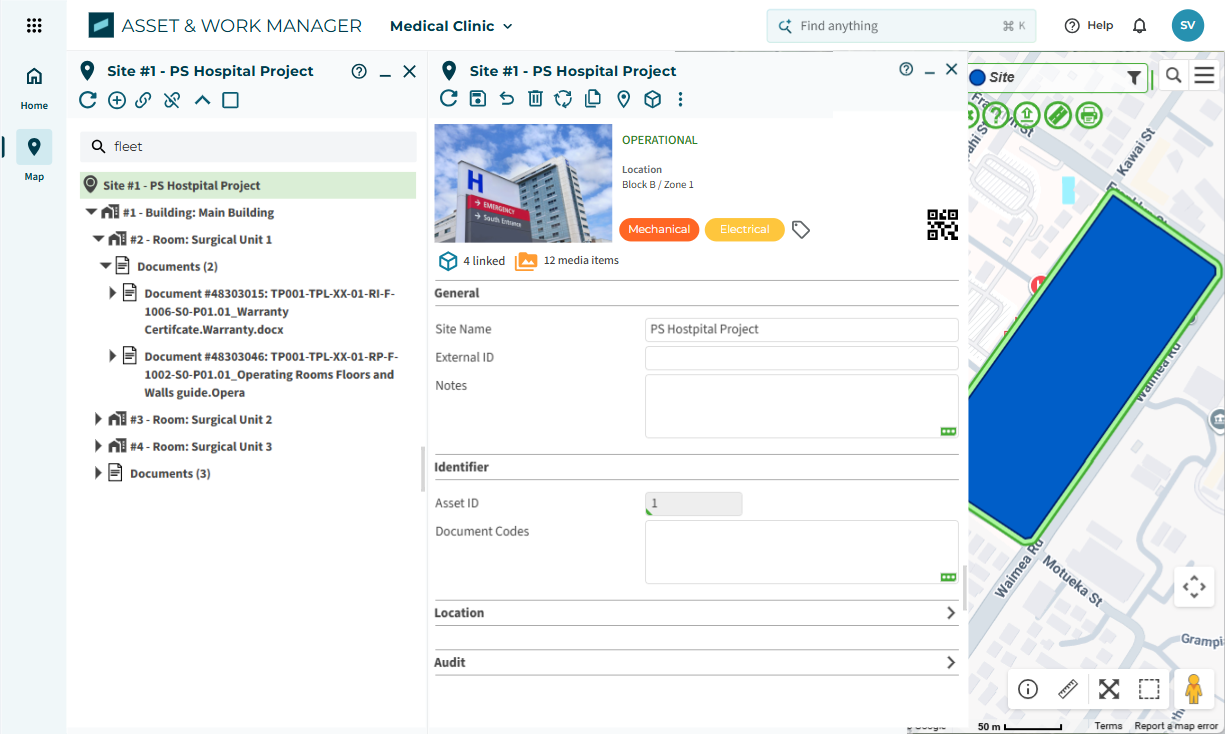
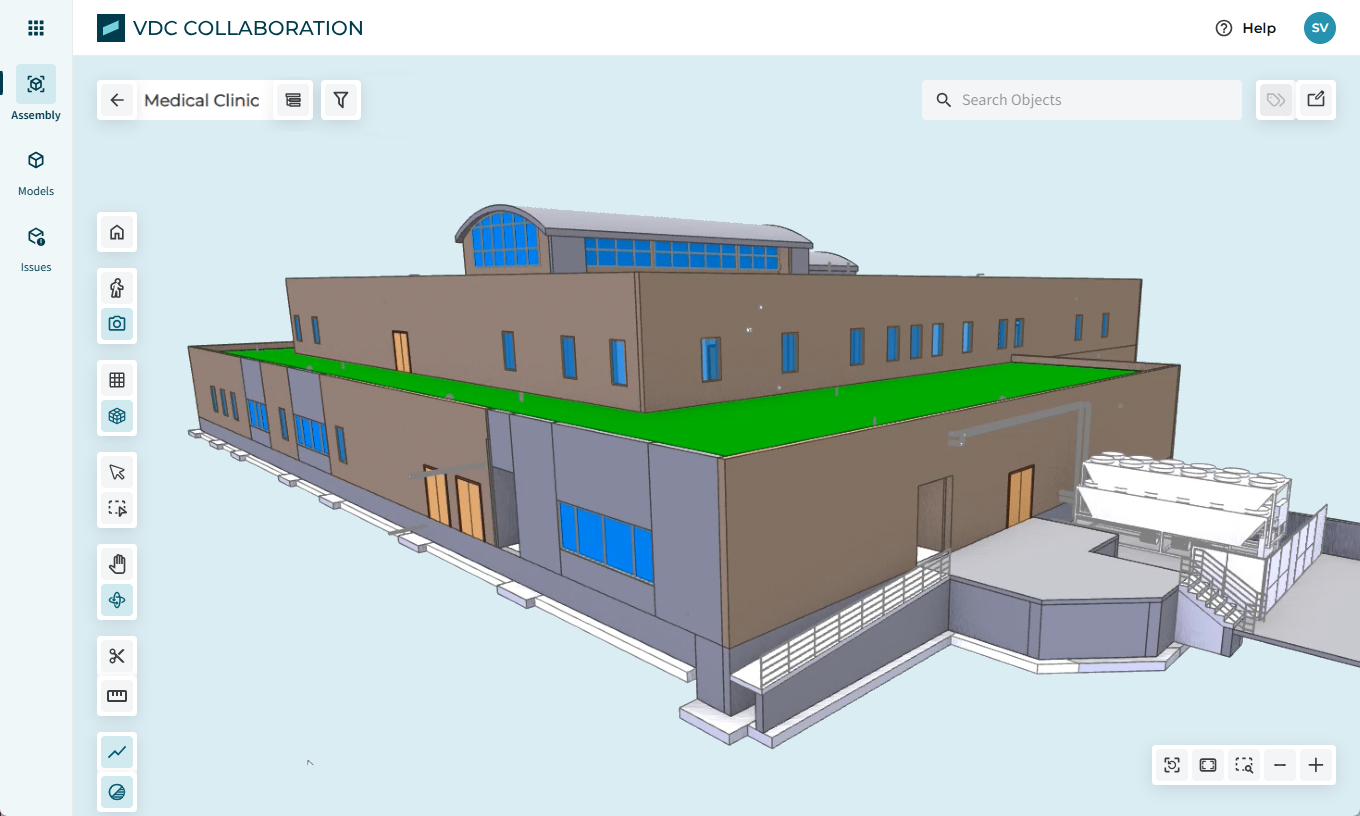
Capture and structure asset data across delivery
Aggregate and structure asset information from Thinkproject VDC and external sources into a centralised, governed repository—enabling progressive review instead of last-minute collation at project closeout.
Validate completeness, quality, and readiness
Use workflow-driven validation to identify missing data, incomplete documentation, and non-compliant records early—ensuring all asset information is accurate, approved, and ready before handover.
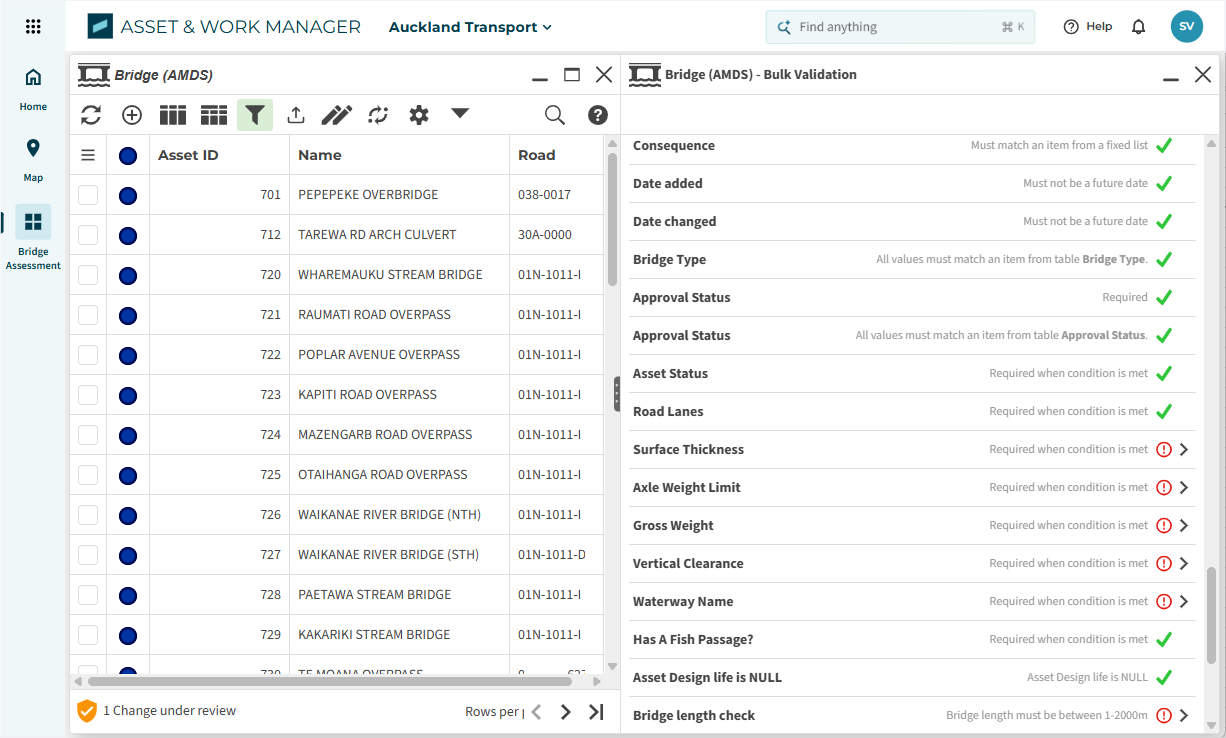
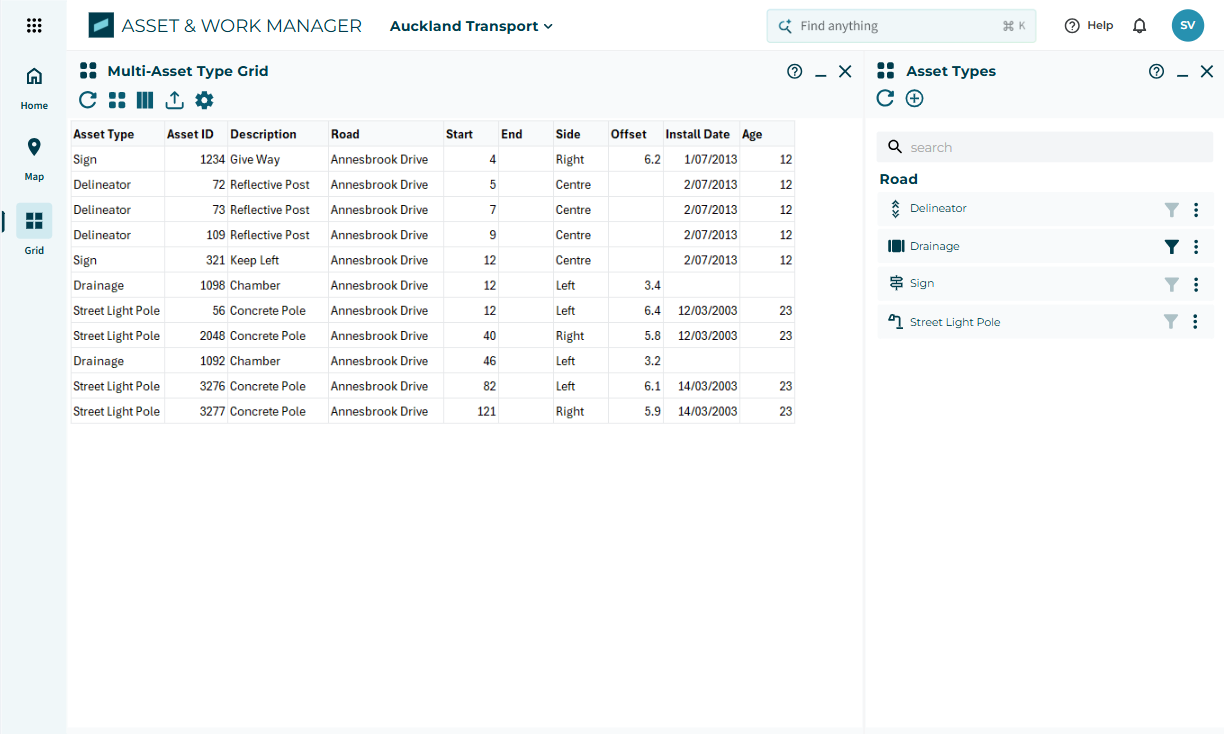
Transfer validated document into operations (from CDE)
Deliver a structured, evidence-linked dataset into Asset Manager, Work Manager, creating a continuous “golden thread” from project delivery into operations.
For asset owners, operators, and contractors
HANDOVER supports teams that need structured, validated asset data that flows from project delivery into operations, without rework.
For Asset owners and operators
Create a structured, validated digital asset register ready for inspection, maintenance, compliance, and warranty tracking from handover onwards.
Define standard requirements across projects
Improve readiness, traceability, and operational reuse
Transfer validated data into Asset Manager or external asset environments
For general contractors and delivery teams
Avoid last-minute handover challenges by collecting, validating, and linking required data and evidence continuously across disciplines and packages.
Reduce closeout delays and missing information
Track readiness by contractor, discipline, and asset group
Deliver evidence-linked datasets with less manual collation
Construction handover breaks down when asset data is late, incomplete, and disconnected
In complex, regulated industries, the transition from project delivery to operations is fundamentally broken.
Asset data created during design and construction is often lost, incomplete, or not fit for operational use at handover.
When data sits across file drives, spreadsheets, contractor submissions, and external systems, teams struggle to know what is complete, what is compliant, and what can move into live operations.
No handover chaos. Follow a structured path into operations.
HANDOVER combines defined requirements, progressive data capture, validation, and controlled transfer to turn delivery information into operations-ready asset datasets. The result is a more controlled and auditable construction handover process.
Define the handover standard
Define Asset Information Requirement, configure asset types, hierarchies, attributes, evidence requirements, and validation rules for each discipline or asset type.
Review and validate throughout delivery
Import and assess 3D model data and linked documents continuously throughout the project.
Retain and transfer validated datasets into operations
Keep a governed handover system of record while delivering structured, evidence-linked asset data into Thinkproject Asset Manager, Work Manager, or external asset management environments with auditability intact.
Control layer
Templates, validation rules, readiness tracking, auditability
Value layer
Structured data, linked evidence, continuous readiness, smooth transition
Asset information handover workflows for operational readiness
Focus on the workflows where structured asset data and governed validation make the biggest difference.
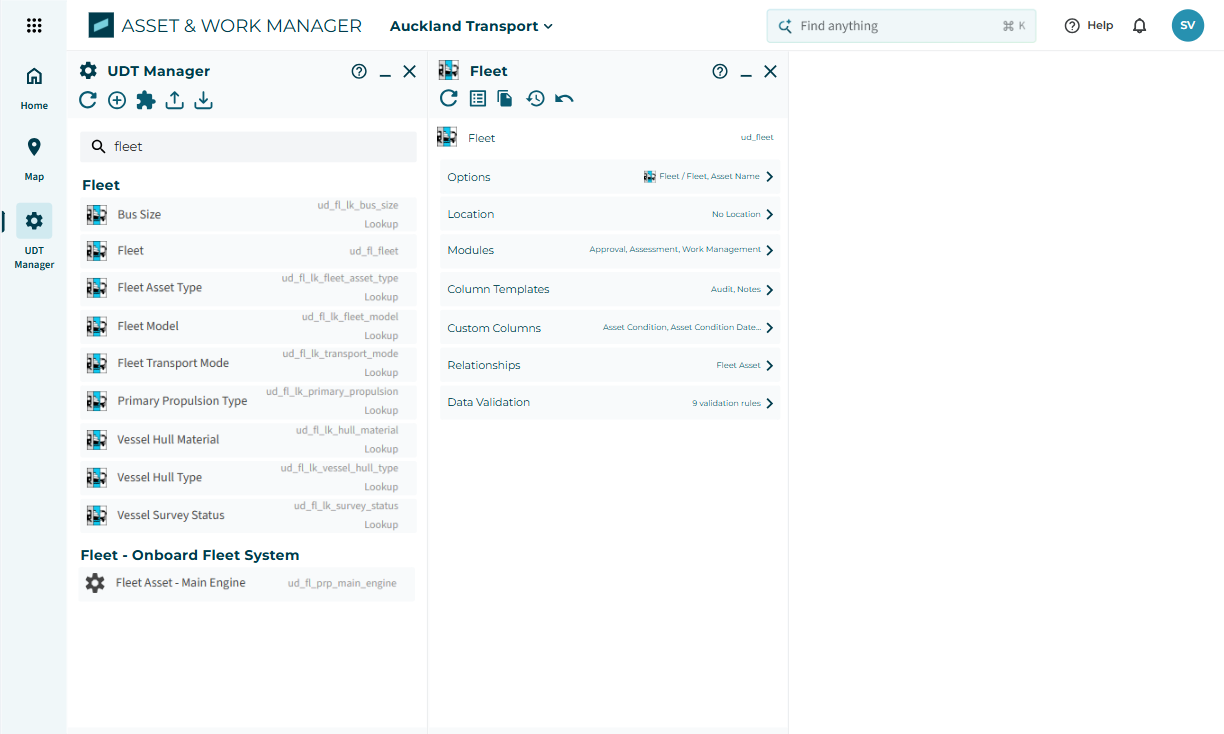
Define asset information requirements
- Standardise asset types, attributes, templates, and evidence requirements across projects and portfolios.
- Outcome: A consistent handover standard for operations-ready asset data
Import and review asset data in context
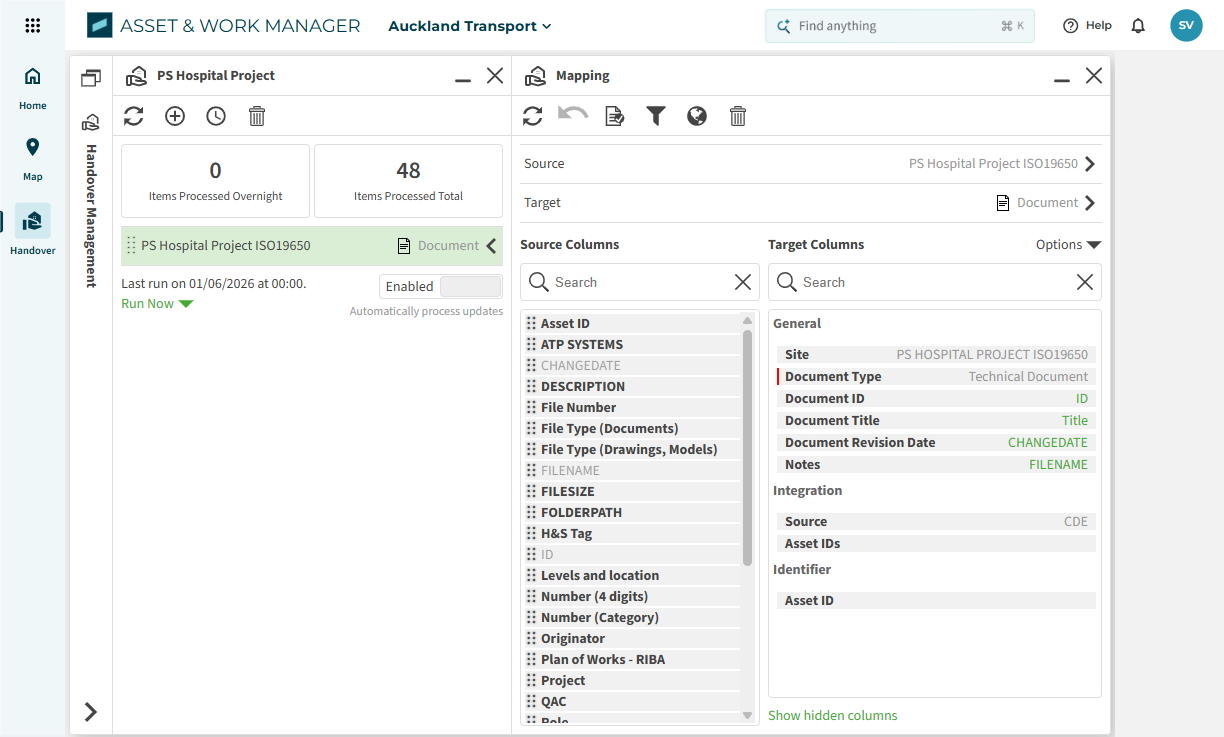
- Bring in structured data from Thinkproject VDC or external systems and review it progressively through the lifecycle.
- Outcome: Less late-stage collation and stronger visibility of asset completeness
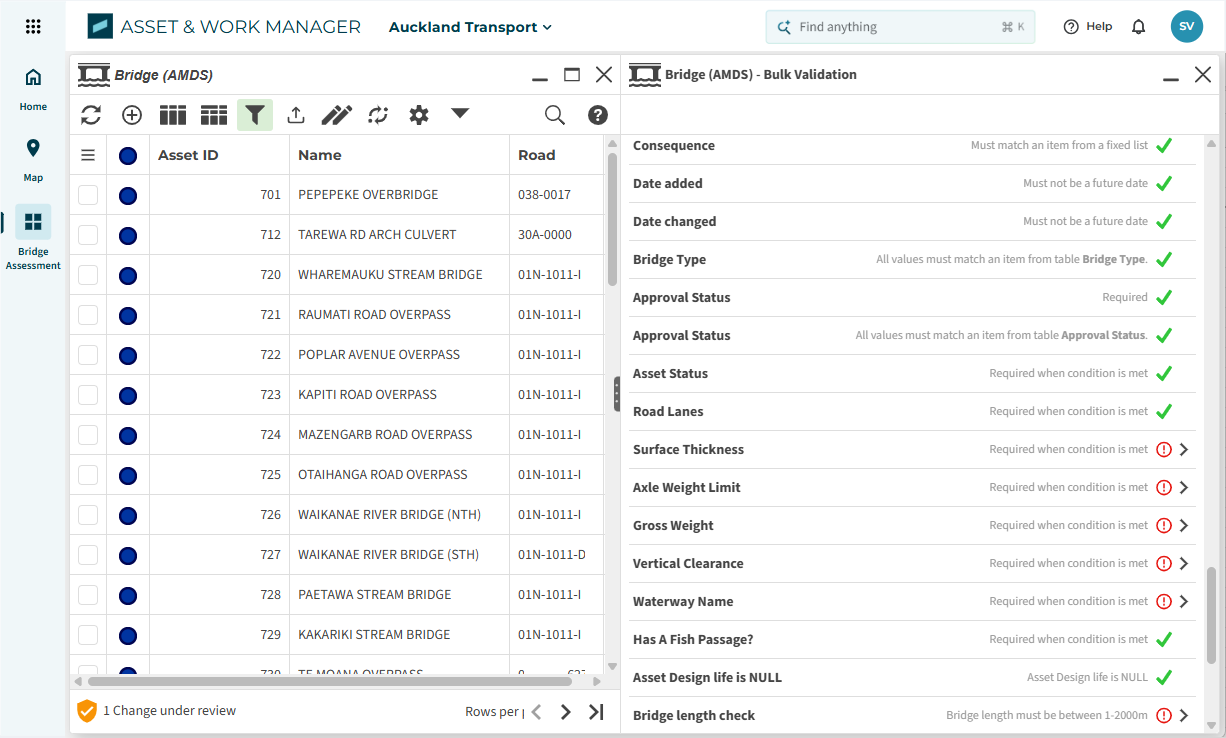
Validate data quality and readiness
- Check asset records against configured rules to identify missing data, documents, or hierarchy issues before acceptance.
- Outcome: Higher handover quality and fewer closeout surprises
Link evidence and maintain traceability
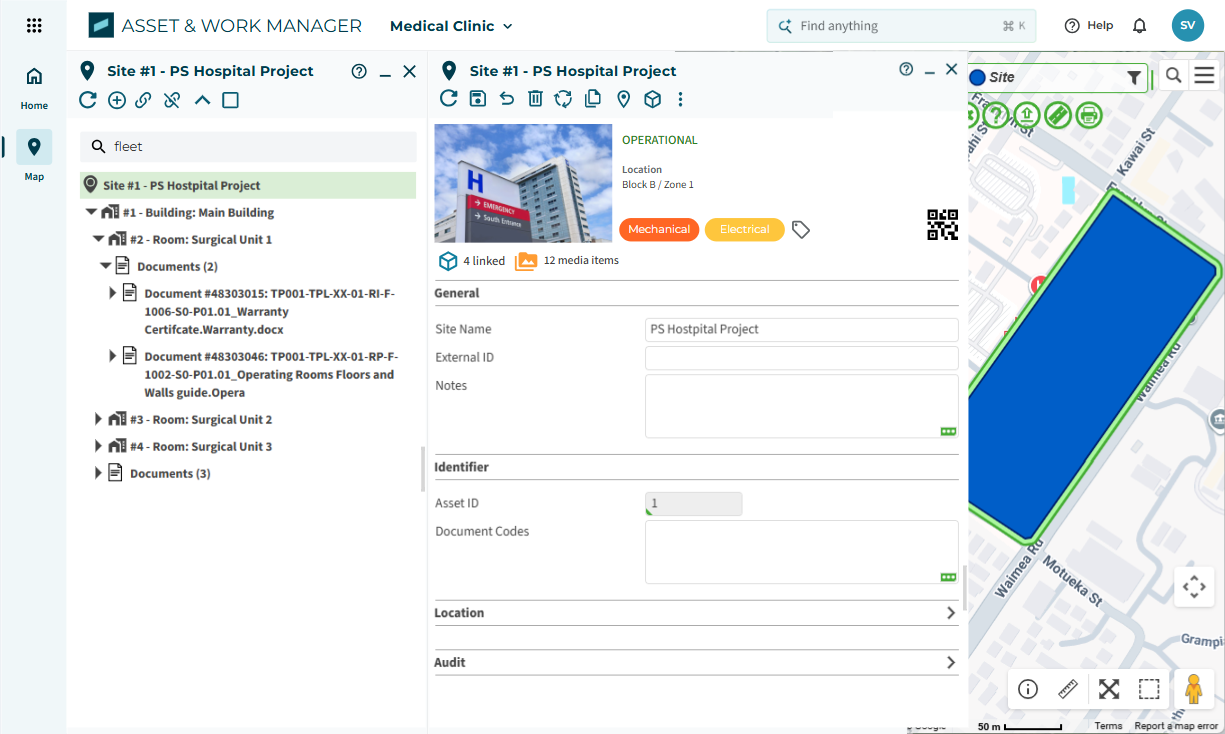
- Connect certificates, manuals, compliance records, and project documents to asset records with auditable relationships.
- Outcome: More defensible handover and easier operational verification
Handover transfer for operations
- Publish validated datasets into Thinkproject Asset Manager, Work Manager, or third-party asset systems for immediate operational use.
- Outcome: Faster time to usable asset data, with a defensible handover record retained independently of the destination system.
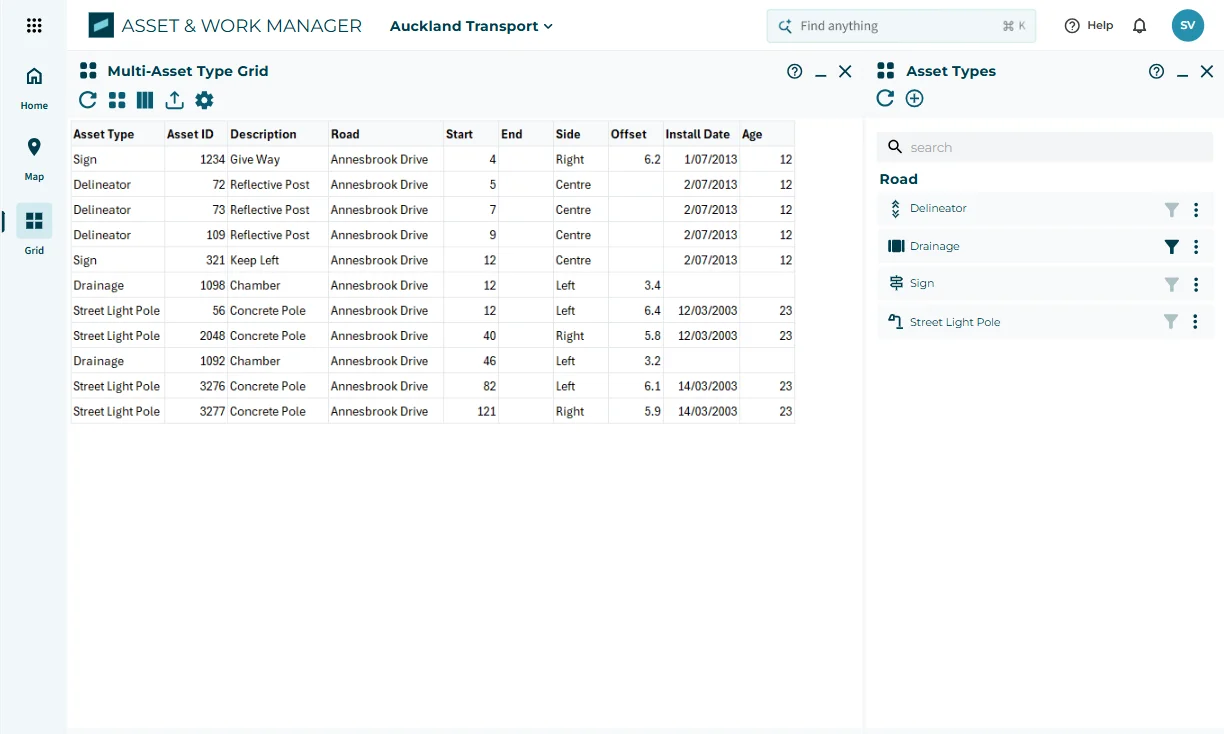
One handover environment. All capabilities for structured asset transition.
HANDOVER provides the core capabilities needed to define, collect, validate, evidence, and transfer operations-ready asset information.
One Platform. The structured route from project into operational intelligence.
HANDOVER can operate as the governed system of record for asset handover, even when the destination asset environment is external. When connected with Thinkproject VDC Collaboration, NextGen CDE, Asset Manager, and Work Manager, it creates a richer, continuous thread of asset history from project delivery into operations.
NextGen CDE

VDC COLLABORATION

ASSET MANAGER

WORK MANAGER

Built for governed handover, defensible evidence, and auditable transfer
HANDOVER gives organisations a controlled system of record for asset handover, helping them prove what was required, submitted, validated, accepted, and transferred at project handover.
- Role-based access and central user provisioning through the Thinkproject Platform
- Full audit trail across asset data, validation activity, and linked evidence
- Controlled completeness and consistency checks against defined rules
- Auditable relationship between asset records and required documentation
- Structured transfer into downstream operational systems with traceability intact
- Independent record of handover acceptance and transfer, even when data is published to external operational systems
Start small. Scale fast.
Start with one asset class, contractor package, or project, then standardise structured handover across programmes and portfolios.
- Start with priority asset classes, packages, or closeout scope
- Standardise templates, evidence requirements, and validation rules
- Extend into Asset Manager, Work Manager, and external systems
- Reuse structures and governance across projects and portfolios
Frequently asked questions
HANDOVER is Thinkproject’s project-to-operations transition solution. It functions as construction handover software, helping teams define, collect, validate, and deliver structured asset information and linked evidence so operations teams receive data they can reliably use.
HANDOVER is not just a document collection process. It structures asset information, applies validation rules, links required evidence to the right asset records, and tracks readiness throughout delivery instead of waiting until the end of the project.
It is designed for asset owners, operators, project managers, information managers, commissioning managers, contractors, and delivery teams that need operationally ready asset information.
HANDOVER can manage structured asset data, required attributes, hierarchies, linked documents, certificates, manuals, and compliance evidence against defined templates and validation rules.
Validated datasets can be retained in HANDOVER as the accepted handover record and transferred into Thinkproject ASSET MANAGER, WORK MANAGER, or external asset management environments. The strongest continuity is achieved when HANDOVER is connected with Thinkproject ASSET MANAGER, where the full project-to-operations history remains accessible in one connected asset context.
Yes. HANDOVER can use approved documents from Thinkproject CDEs and bring in asset information from delivery processes and external systems, then validate and structure it for operational handover.
Yes. HANDOVER can be used as a standalone handover system of record to define requirements, collect asset data, validate completeness, link evidence, track readiness, and preserve an auditable handover record. Validated data can then be exported or transferred into external asset management, maintenance, or operational systems.
When HANDOVER is connected to Thinkproject ASSET MANAGER, customers gain the richest continuity from project delivery into operations. Asset data, linked evidence, model context, validation history, warranties, inspections, maintenance activity, and operational records can form a continuous asset history rather than being split across disconnected systems.
See how HANDOVER turns project data into operational asset value.
Discover how Thinkproject helps teams structure, validate, and transfer asset information for faster, safer construction handover into operations.