
BIM vs VDC: What's the difference and how do they work together?
BIM vs VDC
Technology is now transforming how projects are planned, managed and delivered. In the construction industry, this transformation is driven by two important concepts: Building Information Modeling (BIM) and Virtual Design and Construction (VDC).
While these terms are sometimes used interchangeably, they represent different — but complementary — approaches to improving project outcomes. In this article, we’ll break down the essentials of BIM vs VDC, explore how they differ, and explain why understanding both is crucial for anyone involved in the construction or built asset industry.

BIM vs VDC: The short answer
If you’re looking for a quick explanation of BIM vs VDC, here’s the simplest way to think about it:
BIM is a digital model and information management process. VDC is a project delivery methodology that uses BIM, along with schedules, costs, workflows and performance data, to improve how projects are planned and delivered.
Rather than competing approaches, BIM and VDC are complementary. In most modern construction projects, BIM provides the information foundation, while VDC helps teams use that information to achieve better project outcomes.
| Feature | BIM | VDC |
|---|---|---|
Primary focus | Digital representation of an asset | Project delivery and optimisation |
Purpose | Create and manage asset information | Improve planning, coordination and execution |
Scope | Models and asset data | Models, schedules, costs, processes and performance |
Main outputs | 3D models, asset information, documentation | Coordinated project plans, simulations, workflows and decision support |
Used by | Designers, engineers, architects, contractors | Project managers, VDC managers, BIM coordinators, construction teams |
Lifecycle stage | Design, construction and operations | Planning, design, construction and delivery |
Relationship | Provides information | Uses BIM information to support project delivery |

BIM is the foundation, VDC is the action
One way to understand the difference is to think of BIM as the source of information and VDC as the framework that turns information into action:
- A BIM model contains data about an asset’s geometry, systems, components and specifications. This information helps project teams understand what is being built.
- VDC takes this information and applies it to real-world project challenges. Teams can use BIM data to perform clash detection, run construction simulations, coordinate stakeholders, optimise schedules, analyse quantities and improve project planning.
In other words, BIM helps teams understand the asset. VDC helps teams understand how to deliver it successfully.
Is BIM part of VDC?
Yes. BIM is generally considered a core component of VDC.
Most VDC workflows rely heavily on BIM models and the information they contain. However, VDC extends beyond BIM by incorporating additional project dimensions such as time, cost, risk, constructability and performance measurement.
Without BIM, many VDC activities would be difficult to perform effectively. Without VDC, BIM models may deliver less value because the information is not fully integrated into planning and decision-making processes.
What is BIM in construction?
Building Information Modeling (BIM) is the process of creating and managing digital representations of the physical and functional characteristics of a building. BIM technology allows architects, engineers and construction professionals to collaborate on a single, unified model that includes detailed 3D geometry and rich data.
Beyond simple 3D modeling, BIM integrates various layers of information — such as materials, costs, scheduling and maintenance details — into the digital design. This makes it possible to simulate the building’s performance throughout its entire lifecycle, from early design concepts to demolition.
What is VDC in construction?
Virtual Design and Construction (VDC) is a project delivery methodology that uses digital models, project information and collaborative processes to improve planning, coordination and construction outcomes.
While BIM focuses on creating digital asset information, VDC focuses on how that information is used.
A typical VDC approach may include:
- BIM model coordination
- Clash detection and constructability reviews
- 4D planning and construction sequencing
- 5D cost and quantity analysis
- Design and construction simulations
- Collaborative project planning
- Performance measurement and optimisation
The key difference is that VDC is not just about technology. It combines people, processes and data to improve project delivery.
How BIM and VDC work together on a real project
The easiest way to understand the relationship between BIM and VDC is to see how they are used throughout a project.
Consider a large hospital development. The project involves architects, engineers, contractors, specialist subcontractors and the future operations team. Each stakeholder needs accurate information and clear coordination to keep the project on schedule and within budget.
1. During design: BIM creates the digital foundation
The project begins with BIM. Design teams create digital models containing information about the building’s structure, systems and components.
Rather than working from disconnected drawings, stakeholders can access a shared digital representation of the asset. This improves coordination between disciplines and helps identify potential design issues earlier.
At this stage, the focus is on creating reliable project information and ensuring everyone works from the same source of truth.
2. During planning: VDC turns information into insight
Once BIM models are available, VDC workflows can begin.
Project teams use model data to perform clash detection, review constructability and simulate construction sequences. They can analyse how different trades will interact on site, identify logistical challenges and test delivery strategies before work starts.
For example, a VDC team may discover that planned installation sequences create access conflicts between mechanical and structural contractors. Resolving the issue virtually is significantly less disruptive than addressing it during construction.
This is where VDC expands beyond BIM. The goal is no longer just to manage information, but to use that information to improve project outcomes.
3. During construction: BIM and VDC support coordination
As work progresses, BIM and VDC continue to work together.
BIM provides up-to-date project information, while VDC processes help teams coordinate activities, manage issues and monitor progress against project objectives.
Model-based reviews, issue tracking and construction simulations help teams identify risks earlier and maintain alignment across stakeholders. This reduces rework, improves communication and supports more predictable delivery.
4. During handover and operations: BIM data delivers long-term value
The value of BIM and VDC does not end when construction is complete.
The information developed during design and delivery can support handover and operations, creating continuity across the built asset lifecycle. Asset owners can access validated information about building systems, equipment and maintenance requirements, reducing the effort required to transition into operations.
Why BIM and VDC matter for modern construction
The construction industry faces increasing pressure to deliver projects faster, more sustainably and with greater certainty. At the same time, projects are becoming more complex. Teams often work across multiple organisations, locations and disciplines while managing growing volumes of information.
BIM and VDC help address these challenges by improving visibility, coordination and decision-making throughout delivery.
Benefits include:
- Earlier identification of design conflicts
- Reduced rework and waste
- Improved schedule reliability
- Better stakeholder collaboration
- Greater cost certainty
- Improved handover readiness
- Stronger lifecycle information management
For owners and operators, the value extends beyond construction. The information generated during delivery can continue to support asset management and operational decision-making long after project completion.
When should teams use BIM, VDC or both?
For most modern projects, the answer is not BIM or VDC, but BIM and VDC together. However, the level of adoption will depend on project requirements, complexity and organisational maturity.
Different sectors may also adopt BIM and VDC in different ways.
- Building construction: Commercial buildings, hospitals and data centres often use BIM for design coordination and VDC for sequencing, logistics planning and multidisciplinary collaboration.
- Infrastructure: Rail, road, energy and utility projects frequently rely on VDC methodologies to coordinate large numbers of stakeholders, manage programme complexity and improve constructability planning.
- Asset-intensive industries: Organisations responsible for long-term asset operation increasingly use BIM and VDC to support digital handover and lifecycle information management.

When BIM may be sufficient
Smaller projects may primarily require BIM for:
- Design coordination
- Documentation management
- Information sharing
- Asset information capture
In these cases, teams can benefit from improved collaboration without implementing a full VDC programme.
When VDC becomes valuable
As projects grow in complexity, VDC can provide additional value through:
- Multi-disciplinary coordination
- Construction planning and simulation
- Risk reduction
- Cost optimisation
- Stakeholder alignment
Large infrastructure programmes, transportation projects, energy developments and major commercial projects often benefit most from VDC methodologies.
When both deliver the greatest value
The strongest results typically come when BIM and VDC work together:
- BIM provides reliable project information.
- VDC transforms that information into actionable insights that support planning, coordination and delivery.
Together, they help teams move from simply managing information to actively improving project outcomes.
Managing BIM and VDC workflows with Thinkproject
Successful BIM and VDC strategies depend on more than standalone models. Teams also need connected information, effective collaboration and clear governance throughout the project lifecycle.
The Thinkproject Platform helps organisations connect information, people and processes across design, construction, handover and operations. For BIM and VDC teams, Thinkproject provides solutions that support model coordination, information management and lifecycle collaboration:
- NextGen CDE provides a governed environment for managing project information, documents, workflows and approvals, ensuring stakeholders work from a trusted source of information throughout delivery.
- VDC COLLABORATION enables teams to federate multidisciplinary models, review designs in a browser-based environment and manage BIM Collaboration Format (BCF) issues throughout their lifecycle.
- VDC MANAGER supports BIM management workflows including model validation, clash detection, constructability assurance, 4D planning simulations and 5D quantity take-offs.
Together, these solutions help organisations create connected BIM and VDC workflows that improve coordination, reduce rework and support better project outcomes across the entire built asset lifecycle.
FAQs about BIM vs VDC
VDC stands for Virtual Design and Construction.
It is a project delivery methodology that uses BIM models, project information, schedules, costs and collaborative processes to improve planning, coordination and construction outcomes.
4D BIM adds time and scheduling information to a BIM model, allowing teams to simulate construction sequencing and identify potential delivery risks.
5D BIM adds cost information, helping teams perform quantity take-offs, estimate costs and improve budget planning.
Both are common VDC applications because they extend BIM information into project planning and decision-making.
For construction planning, VDC is generally more comprehensive because it incorporates BIM information alongside schedules, workflows, risk management and performance analysis.
However, VDC depends on reliable BIM information. The most effective approach is typically to use BIM and VDC together rather than treating them as alternatives.
A BIM coordinator typically focuses on model management, coordination and information quality across project disciplines.
A VDC engineer usually has a broader responsibility that includes BIM coordination as well as construction planning, clash resolution, 4D sequencing, performance analysis and project optimisation.
While responsibilities vary between organisations, VDC roles generally have a wider project delivery focus, whereas BIM roles concentrate more on model and information management.
More insights
-
Blog
Asset Management
Asset lifecycle management in construction: From planning to decommissioning
Read moreLearn how asset lifecycle management connects planning, construction, handover, operations and maintenance to improve built asset performance.
-
Blog

BIM
Browser-based BIM viewer performance: 10 factors that affect large IFC models
Read moreDiscover what impacts browser-based BIM viewer performance - from geometry and IFC file quality to client hardware and network. A technical guide for BIM teams.
-
Blog

BIM
8 best BIM collaboration software systems for construction teams
Read moreExplore the best BIM collaboration software systems, from CDEs and model coordination to issue tracking, document control, field collaboration, and handover.
-
Blog
CDE
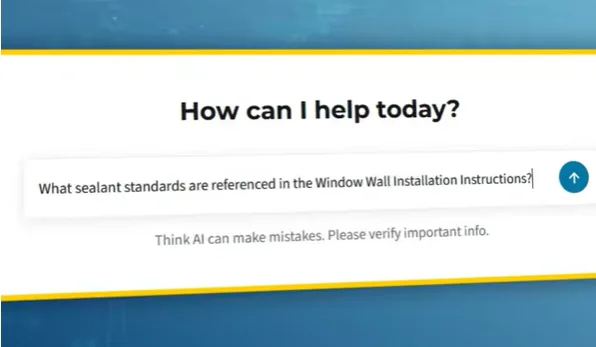
AI Search in NextGen CDE: How Thinkproject AI turns governed construction data into confirmed answers
Read moreDiscover how AI search in a NextGen CDE helps construction teams find current, approved project information while preserving permissions and control.
-
Blog

Digitalization
Construction business intelligence: Turning data into better decisions
Read moreLearn how construction business intelligence connects project data, improves reporting and supports better decisions across the asset lifecycle.
-
Blog

Contracts
Best construction contract management software: 11 features to look for
Read moreCompare the key features to look for in construction contract management software, from NEC, JCT and FIDIC workflows to audit trails and risk control.
-
Event
Built Asset Lifecycle Platform
Thinkproject Live London 2026
Register nowDiscover how AI and connected data are helping teams reduce risk, improve control, and make faster, smarter decisions across the project lifecycle.
-
Event

Built Asset Lifecycle Platform
Thinkproject Live Events 2026
Read moreJoin construction, infrastructure, and asset management leaders for a day focused on the future of project and asset delivery.
-
Blog
Contracts
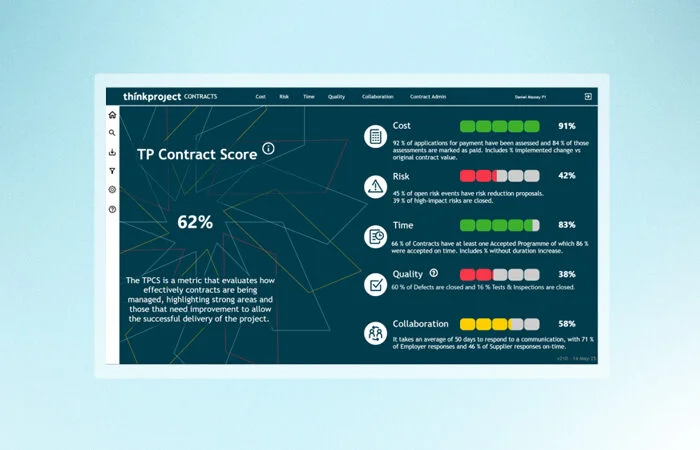
JCT contract types: Choosing and managing the right contract
Read moreCompare the main JCT contract types, understand construction management contracts and learn how to choose and administer the right form.