
The hidden problem in project controls reporting: data confidence
In construction and infrastructure projects, project controls reporting is supposed to provide a clear picture of programme performance, risk exposure and delivery progress. Yet many project teams spend more time validating data than analysing performance.
Despite significant investment in digital tools, organisations continue to face challenges with fragmented information, inconsistent reporting processes and conflicting project data. Schedules, commercial events, approvals, field activity and project documentation may all be captured digitally, but that does not automatically create confidence in the information used to make decisions.
As a result, many organisations face a growing challenge: they can produce project reports, but they cannot always trust the data behind them.
And when confidence in reporting declines, decision-making becomes slower, more reactive and more difficult to defend.

Why project controls reporting requires constant reconciliation
Ask any experienced project controls professional what happens in the days leading up to a monthly programme review and you’ll often hear a familiar story.
The challenge isn’t producing the report. It’s producing a report that everyone believes.
When leadership teams gather to review programme performance, the discussion often begins with questions that have little to do with delivery itself:
- Which report is correct?
- Why has this figure changed?
- Can we trust this forecast?
- Where did this data come from?

The executive report may only be twenty pages long, but the effort required to produce it is often far more complex than most stakeholders realise. Behind the scenes, project controls teams spend days consolidating information from multiple sources:
- Programme updates from scheduling systems
- Contract changes and commercial events from contract management platforms
- Progress updates from delivery teams
- Approved records from the Common Data Environment (CDE)
- Risk, cost and performance information from specialist systems
Individually, each source may be accurate. But dates don’t always align, progress figures differ between reports, commercial events are managed separately from programme reporting. Supporting evidence exists but is difficult to trace.
The real problem isn’t spreadsheets
Spreadsheets are often blamed for reporting problems. But they are not the root cause. They still exist because they are an easy way to solve a problem many organisations have not addressed elsewhere.
Project controls teams regularly use spreadsheets to:
- Reconcile conflicting information
- Bridge gaps between disconnected systems
- Align inconsistent reporting structures
- Create management reports unavailable elsewhere
- Build programme-wide views from fragmented data sources
In many organisations, the spreadsheet has become the unofficial integration layer for project controls reporting. The real issue is the fragmented information landscape that makes this necessary.
Why contract management and project controls must be connected
One of the biggest contributors to unreliable project controls reporting sits between two areas that are often managed separately: project delivery information and contract information.
Traditionally, project controls reporting focuses on programme performance. Commercial systems focus on obligations, change events, instructions, risks, payments and contractual exposure. Both describe the health of the same project, yet they often operate in parallel.
The result is a series of information blind spots:
- A compensation event affects critical milestones, but the programme impact is not reflected early enough in reporting.
- Delivery delays become visible operationally, but the contractual consequences remain unclear.
- Approved evidence exists, but it is difficult to connect to commercial decisions.
- Contractual risks are managed separately from the data used to forecast programme performance.
When commercial and delivery information are disconnected, project controls teams are forced to make decisions with incomplete context. Reporting becomes harder to trust and decision-making becomes slower.
This is increasingly why organisations are looking to connect contractual events, obligations and supporting evidence with project information through structured, governed processes rather than managing them in isolation.
Why project controls dashboards alone aren’t enough
The industry’s instinctive response to reporting challenges is often to improve reporting itself: to introduce new dashboards or add visualisation layers.
But dashboards can only reflect the quality of the information beneath them. If project records, contractual events and supporting evidence remain disconnected, organisations simply create more polished ways to visualise fragmented information.
The real opportunity lies much earlier in the information chain: reliable project controls reporting starts with reliable relationships between data.
It requires approved project information, contractual events, delivery records and supporting evidence to be connected in a traceable and governed way before reporting begins.

Building confidence back into project controls reporting
Leading organisations are recognising that programme control is not a reporting challenge. It is an information challenge.
Rather than focusing solely on reporting outputs, they are improving the quality and connectedness of the information feeding those outputs. A governed Common Data Environment helps create a trusted foundation by ensuring teams work from approved, traceable project information.
This is why organisations are starting to connect project controls, contract management and governed project information more closely. Platforms like the Thinkproject Platform bring NextGen CDE and CONTRACTS together, helping teams connect approved project information with contractual events, obligations, risks and changes in one governed environment.
This gives project controls teams a clearer line of sight across commercial and programme performance, so they can spend less time reconciling data and more time interpreting it.
When contractual events are connected to governed project information, project controls teams spend less time reconciling data and more time interpreting it. Commercial and delivery teams operate from shared context, while leadership gains earlier visibility into emerging risks.
Most importantly, confidence returns.
The goal isn’t better reporting, it’s better decisions across the entire Built Asset Lifecycle.
THINKPROJECT CONTRACTS + CDE
Reduce contract risk with connected project data and governed workflows
This is the final blog in our three-part series exploring how disconnected project information creates risk across construction and infrastructure delivery. Read the previous blogs below:
The gap between contracts and project information: where risk starts
Why disconnected project information leads to construction disputes
More insights
-
Event

Built Asset Lifecycle Platform
Thinkproject Live London 2026
Register nowDiscover how AI and connected data are helping teams reduce risk, improve control, and make faster, smarter decisions across the project lifecycle.
-
Event

Built Asset Lifecycle Platform
Thinkproject Live Events 2026
Read moreJoin construction, infrastructure, and asset management leaders for a day focused on the future of project and asset delivery.
-
Blog

Asset Management
Asset lifecycle management in construction: From planning to decommissioning
Read moreLearn how asset lifecycle management connects planning, construction, handover, operations and maintenance to improve built asset performance.
-
Blog

BIM
Browser-based BIM viewer performance: 10 factors that affect large IFC models
Read moreDiscover what impacts browser-based BIM viewer performance - from geometry and IFC file quality to client hardware and network. A technical guide for BIM teams.
-
Blog

BIM
8 best BIM collaboration software systems for construction teams
Read moreExplore the best BIM collaboration software systems, from CDEs and model coordination to issue tracking, document control, field collaboration, and handover.
-
Blog
CDE
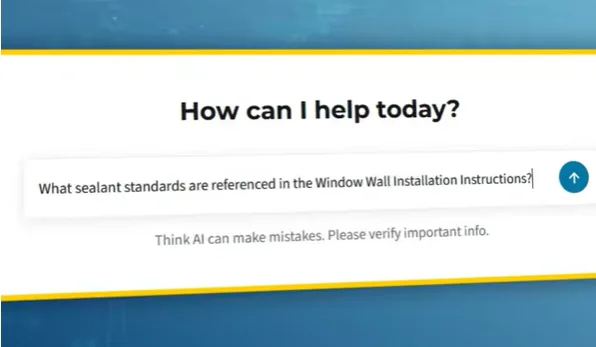
AI Search in NextGen CDE: How Thinkproject AI turns governed construction data into confirmed answers
Read moreDiscover how AI search in a NextGen CDE helps construction teams find current, approved project information while preserving permissions and control.
-
Blog

Digitalization
Construction business intelligence: Turning data into better decisions
Read moreLearn how construction business intelligence connects project data, improves reporting and supports better decisions across the asset lifecycle.
-
Blog

Contracts
Best construction contract management software: 11 features to look for
Read moreCompare the key features to look for in construction contract management software, from NEC, JCT and FIDIC workflows to audit trails and risk control.
-
Blog
Contracts
JCT contract types: Choosing and managing the right contract
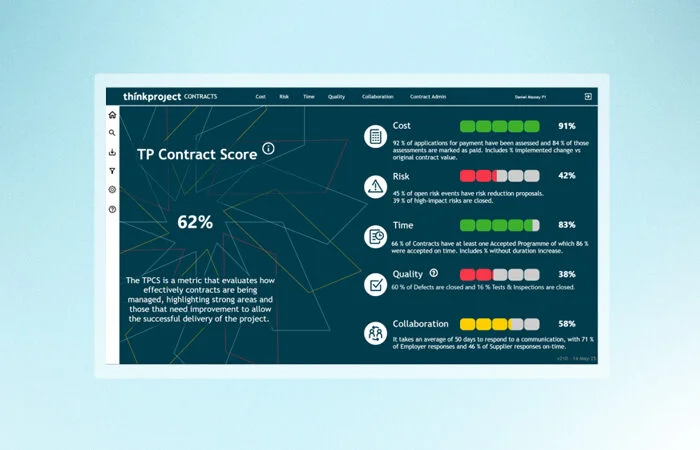
Read moreCompare the main JCT contract types, understand construction management contracts and learn how to choose and administer the right form.