
The gap between contracts and project information: where risk starts
Here is a scenario that might sound familiar: It’s Monday morning on a major infrastructure project. A contractor raises a change request based on site conditions. The commercial team checks the contract. The project team checks the latest drawings. The PMO reviews the impact of the program.
Three teams. Three systems. Three slightly different versions of the truth.
By the time everything is reconciled, days have passed. The decision is delayed. The risk has already materialised.
This is not an isolated issue. Across the industry, inefficiencies like this scale into billions. According to World Commerce & Contracting, organisations lose almost 9% of contract value due to poor contract lifecycle management.
While often viewed as a contract management issue, in practice these losses are closely linked to how contracts and project information are managed separately, creating gaps between obligations and delivery.
The gap between contracts and project data is one of the places where risk starts.
In this blog, we explore how this disconnect create hidden risk across teams.
Contracts and project documentation: two worlds, one project
Despite the fact that digitalisation is now accessible to all organisations, in most construction projects, contracts and project documentation live in different systems:
- Contracts are managed in commercial tools, spreadsheets, or document repositories
- Project information sits in a Common Data Environment (CDE), emails, or shared drives
Both contain critical information. But they are rarely connected.
This creates a structural gap. Decisions rely on information that is not aligned, increasing the risk of delays, errors, and misinterpretation. Teams are working on the same project, but not from the same reality.
Manual reconciliation: where inefficiency turns into construction contract risk
At first, this separation appears manageable. Teams continue to use familiar tools, and work progresses.
But as soon as information needs to move between systems, the burden shifts to people.
Teams are forced to manually connect the dots:
- Cross-checking contracts against drawings
- Copying information into emails or trackers
- Rebuilding timelines to reflect commercial changes
These activities introduce friction at every step. Manual processes are slow, prone to error, and difficult to scale. Updates are missed. Context is lost. Information becomes inconsistent.
What begins as routine work gradually shapes how projects are delivered, embedding inefficiency into everyday decisions and increasing construction contract risk over time.

From disconnected data to misaligned decisions
As manual workarounds increase, consistency breaks down.
Data is duplicated across systems. Updates are not synchronised. These construction data silos reduce visibility and make it harder to trust the information available.
This directly affects decision-making. Information is incomplete or outdated. Confidence drops. Decisions are delayed or made on assumptions.
At the same time, teams lose visibility across the project. Each function focuses on its own priorities:
- Commercial teams protect contractual position
- Project teams focus on delivery milestones
- PMOs focus on reporting and timelines
Without a shared view, issues are not resolved early. They surface later, often with greater impact:
- A missed contractual obligation becomes a dispute
- A design change not linked to contract terms leads to rework
- A delay in the schedule is not reflected in commercial exposure
What starts as disconnected data becomes misaligned decisions. This leads to increased cost and risk.
The real issue: the gap between systems
Most organisations already have:
- A system for managing contracts
- A system for managing project information
The issue is not within these systems, but between them. This gap creates:
- Duplicate data entry
- Misaligned workflows
- Lack of traceability between decisions and obligations
This is where projects become harder to control and where teams begin to lose alignment.
Leading organisations are starting to recognise the shift, moving away from optimising individual tools and instead focusing on how contracts and project information connect across workflows.
Fragmented vs. connected delivery: why the gap matters
The difference becomes clear when you compare how projects operate today versus what is required to manage risk effectively:
| Fragmented | Connected |
|---|---|
Duplicate data | One consistent source of truth |
Manual reconciliation | Aligned data across workflows |
Delayed decisions | Faster, evidence-based decisions |
Late risk visibility | Early, proactive risk identification |
Siloed teams | Aligned commercial and project teams |
The challenge is that most organisations still operate in the fragmented model.
This makes it harder to identify issues early, increases reliance on manual processes, and limits how effectively teams can manage risk.
A shift in perspective: connecting contracts and project data
This is why leading organisations are starting to rethink how contracts and project information work together across delivery.
Platforms like the Thinkproject Platform bring project information in a CDE together with CONTRACTS, aligning delivery and commercial processes to reduce duplication and improve collaboration across teams.
THINKPROJECT CONTRACTS + CDE
Reduce contract risk with connected project data and governed workflows
What happens if the gap remains
The gap between contracts and project data is often invisible until it creates real consequences.
When it remains unaddressed:
- Decisions are delayed
- Risks are identified too late
- Teams struggle to stay aligned
These issues do not resolve themselves. They escalate, increasing pressure across teams and making projects harder to control.
This gap does not just create inefficiency. It creates the conditions for disputes, delays, and loss of commercial control. It makes construction contract risk harder to manage across the entire project lifecycle.
This is the first blog in a three-part series.
In the next blog, we explore how this disconnect directly leads to disputes and commercial risk, and why it becomes harder to recover once issues surface.
More insights
-
Event

Built Asset Lifecycle Platform
Thinkproject Live London 2026
Register nowDiscover how AI and connected data are helping teams reduce risk, improve control, and make faster, smarter decisions across the project lifecycle.
-
Event

Built Asset Lifecycle Platform
Thinkproject Live Events 2026
Read moreJoin construction, infrastructure, and asset management leaders for a day focused on the future of project and asset delivery.
-
Blog

Asset Management
Asset lifecycle management in construction: From planning to decommissioning
Read moreLearn how asset lifecycle management connects planning, construction, handover, operations and maintenance to improve built asset performance.
-
Blog

BIM
Browser-based BIM viewer performance: 10 factors that affect large IFC models
Read moreDiscover what impacts browser-based BIM viewer performance - from geometry and IFC file quality to client hardware and network. A technical guide for BIM teams.
-
Blog

BIM
8 best BIM collaboration software systems for construction teams
Read moreExplore the best BIM collaboration software systems, from CDEs and model coordination to issue tracking, document control, field collaboration, and handover.
-
Blog
CDE
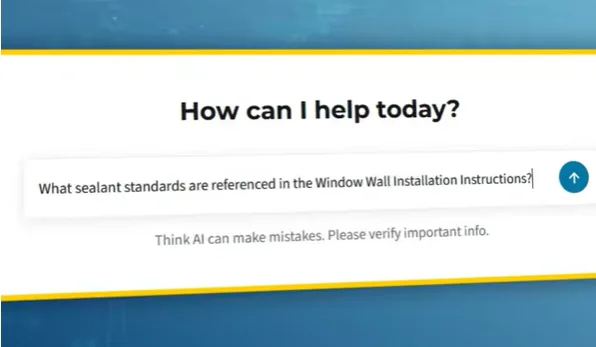
AI Search in NextGen CDE: How Thinkproject AI turns governed construction data into confirmed answers
Read moreDiscover how AI search in a NextGen CDE helps construction teams find current, approved project information while preserving permissions and control.
-
Blog

Digitalization
Construction business intelligence: Turning data into better decisions
Read moreLearn how construction business intelligence connects project data, improves reporting and supports better decisions across the asset lifecycle.
-
Blog

Contracts
Best construction contract management software: 11 features to look for
Read moreCompare the key features to look for in construction contract management software, from NEC, JCT and FIDIC workflows to audit trails and risk control.
-
Blog
Contracts
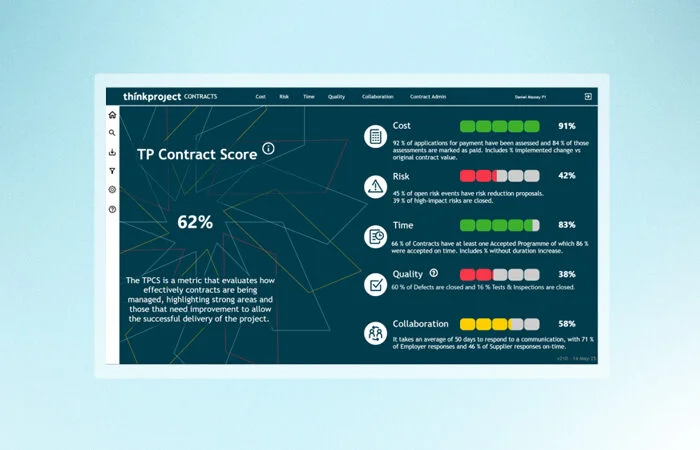
JCT contract types: Choosing and managing the right contract
Read moreCompare the main JCT contract types, understand construction management contracts and learn how to choose and administer the right form.