
What is VDC? A Complete Guide to Virtual Design and Construction
Virtual Design and Construction (VDC) is a methodology that uses digital models, project data, and collaborative workflows to plan, simulate, and optimise construction projects before work begins on site. Designers, contractors, and asset owners increasingly rely on VDC to manage growing project complexity, reduce coordination issues, and improve lifecycle visibility across built assets.
As construction projects become more connected and data-driven, organisations are moving toward connected data ecosystems that support continuity across planning, delivery, handover, and operations. VDC helps teams move beyond siloed design and construction processes into connected delivery workflows.
This guide explains what VDC is, how it differs from BIM, and how modern digital platforms support VDC workflows across the built asset lifecycle.
What is VDC?
Virtual Design and Construction (VDC) is a project delivery methodology that combines digital models, construction planning, cost information, and collaboration workflows to improve how built assets are designed, delivered, and operated.
The term was formalised by Stanford University’s Center for Integrated Facility Engineering (CIFE) in 2001 as a framework for integrating multidisciplinary digital models with construction and project delivery processes. Today, VDC is widely used across infrastructure, commercial building, and industrial projects to improve coordination and decision-making throughout the asset lifecycle.
A common principle behind VDC is: build it digitally first, then physically, using connected BIM workflows and construction data.
Rather than relying on disconnected drawings, spreadsheets, and manual coordination, VDC enables teams to simulate construction activities before work begins on site. This helps identify clashes, sequencing issues, cost risks, and constructability problems earlier, when they are easier and less expensive to resolve.
VDC also supports the collaborative information management principles defined in ISO 19650. It creates a structured environment where project information, models, workflows, and approvals remain governed, traceable, and accessible across multiple stakeholders.
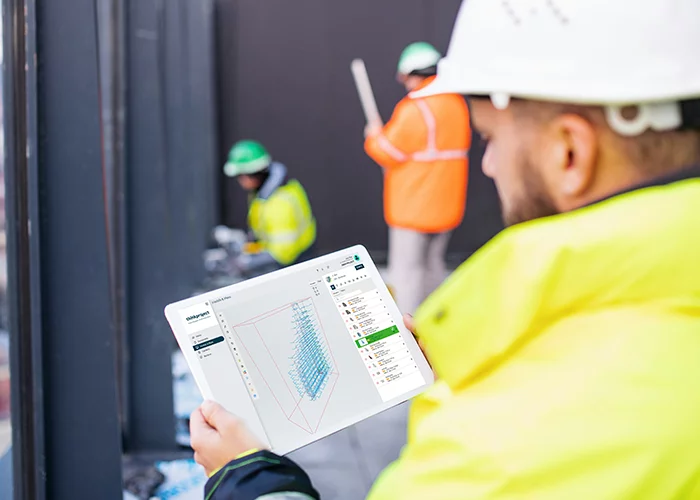
VDC vs. BIM:
What’s the difference?
BIM is the tool. VDC is the strategy that uses it.
While the terms are often used interchangeably, Building Information Modeling (BIM) and VDC are not the same thing. BIM focuses primarily on creating intelligent 3D models with embedded project data. VDC uses BIM as one part of a broader delivery methodology that includes scheduling, cost planning, coordination, logistics, and operational readiness.
You can learn more in our guides to BIM and BIM vs. VDC.
| BIM | VDC | |
|---|---|---|
What it is | A 3D digital model with data attached | A methodology that uses BIM to improve project delivery |
Scope | Design and modelling phase | Connected delivery workflows across planning, design, construction, and operational readiness |
Outputs | Model files and structured project information | Coordinated models, schedules, cost forecasts, issue management, and handover-ready information |
Tools involved | Revit, ArchiCAD, MicroStation, IFC-based coordination tools | BIM tools + 4D scheduling + 5D cost + collaboration + analytics |
Owners and users | BIM modellers, coordinators | Designers, contractors, asset owners, facility managers |
Standards | ISO 19650 information management | ISO 19650 + integrated delivery and coordination methodologies |
VDC also incorporates 4D scheduling, 5D cost estimation, logistics, constructability, and operations-ready information workflows; BIM does not on its own.
Core components of VDC
3D modeling and visualization
BIM forms the foundation of most VDC workflows. Multidisciplinary design models are combined into federated project models that allow teams to visualise buildings and infrastructure assets in a coordinated digital environment.
These models improve communication across stakeholders and help teams understand spatial relationships, asset information, and design intent before construction begins.
4D scheduling (time) and 5D cost estimation
VDC extends BIM by connecting models to construction schedules and cost data.
- 4D workflows link model elements to programme activities so teams can simulate construction sequences over time. This helps identify scheduling conflicts, optimise sequencing, and reduce delivery risk before work reaches site.
- 5D workflows add quantity take-off and cost management information to models, supporting model-based quantity take-offs, forecasting, and commercial visibility.
Modern VDC platforms also help teams compare design changes against time and budget impacts earlier in the project lifecycle.
Collaboration and coordination across stakeholders
Construction projects involve designers, engineers, contractors, consultants, and owners working across multiple disciplines and organisations. VDC creates a shared environment for coordinated decision-making.
This includes:
- Federated model review
- BCF issue management
- Model-based coordination workflows
- Shared approvals and decision tracking
- Controlled access to current project information
Modern collaboration environments also allow non-technical stakeholders to review models without requiring authoring software expertise.
Process and workflow optimization
VDC is not only about 3D visualisation. It also improves how teams manage workflows, approvals, and project coordination. By standardising review processes and linking information across teams, VDC reduces manual coordination, duplicated work, and delays caused by disconnected project data.
This supports:
- Faster issue resolution
- Reduced rework
- Better cross-team visibility
- More predictable delivery outcomes
Simulation and analysis
VDC enables teams to test project outcomes digitally before physical construction starts.
Typical simulations and analyses include:
- Clash detection
- Constructability validation
- Site logistics planning
- Design compliance checks
- Temporary works simulation
- Construction sequencing analysis
VDC workflows across the construction project lifecycle
VDC workflows increasingly support continuity across planning, delivery, handover, and operational readiness.
Planning and design
During planning and design, digital platforms supporting VDC workflows help teams coordinate multidisciplinary models, validate designs, and improve constructability before procurement and construction begin.
This stage often includes:
- BIM authoring
- Model federation
- Design reviews
- Clash detection
- Information validation
- Early scheduling analysis
Scheduling and cost management
As projects move toward delivery, VDC workflows connect models with schedules and commercial data. Teams can simulate delivery sequences, compare scenarios, and improve forecasting using 4D and 5D workflows. This improves visibility into programme risk, procurement timing, and cost exposure before work starts on site.
Construction execution
During construction, VDC supports ongoing coordination between site teams, designers, and project managers. Issue tracking, model-based reviews, field coordination, and workflow management help teams maintain alignment between design intent and site execution.
VDC outputs are also increasingly linked to quality, safety, and handover workflows through integrated digital delivery environments.
Operations and maintenance
The role of VDC does not end at project completion.
Increasingly, building and infrastructure owners expect structured, operations-ready digital asset information at handover, often as a foundation for future digital twin initiatives. Validated models, asset information, manuals, and operational data support long-term maintenance, inspections, and lifecycle planning.
This is where governed information management becomes critical. A Common Data Environment such as Thinkproject CDE NextGen provides the controlled environment where VDC outputs are stored, versioned, reviewed, and handed over across the asset lifecycle.
As organisations move toward connected asset operations, VDC also supports lifecycle continuity between design, construction, handover, and operational asset management.
The modern VDC workflow stack: authoring vs. collaboration
Modern VDC environments typically separate technical authoring workflows from collaborative coordination workflows.
Authoring environments
Authoring environments are where technical BIM coordination and constructability analysis happen.
These tools support:
- Clash detection
- Model validation
- 4D simulations
- 5D quantity take-offs
- BIM data integration
- Automation and scripting workflows
Platforms such as Thinkproject VDC Manager support these technical coordination workflows. VDC Manager supports constructability assurance through configurable validation rules, multi-dimensional model management, quantity take-offs, and schedule-linked simulations. It also supports open BIM workflows through formats such as IFC and BCF, helping teams work across mixed technology environments.
Collaboration platforms
Collaboration platforms make VDC accessible beyond BIM specialists.
These environments focus on:
- Browser-based model review
- Federated model access
- BCF issue workflows
- Viewpoint management
- Coordination tracking
- Decision visibility
Collaboration platforms such as Thinkproject VDC Collaboration support multidisciplinary project coordination.
By enabling accessible 3D review without authoring tools, these platforms help project managers, contractors, consultants, and asset owners participate directly in model-based coordination workflows. This improves transparency, accountability, and communication across the project lifecycle.
The benefits of using VDC
Reduced rework and coordination conflicts
One of the biggest advantages of VDC is earlier issue identification. Clash detection and constructability validation reduce the likelihood of costly site conflicts and redesign work during construction.
Improved project predictability
4D simulations and connected scheduling workflows help teams identify programme risks earlier and improve sequencing decisions before work starts on site.
Better collaboration across stakeholders
VDC creates shared project visibility across designers, contractors, and owners. This improves communication and reduces the fragmentation often associated with traditional delivery workflows.
Stronger cost and commercial visibility
5D workflows improve quantity accuracy and support earlier forecasting of commercial impacts linked to design or scheduling changes.
Better lifecycle continuity
VDC outputs increasingly support downstream operations and maintenance workflows. Structured handover data, validated asset information, and governed project records help asset owners maintain continuity between delivery and operations.
Real-world VDC:
customer examples
Thinkproject’s VDC solutions support complex infrastructure and construction projects across multiple sectors.
DEGES
DEGES used VDC workflows to improve coordination and visibility across major German infrastructure delivery programmes. By integrating model-based collaboration into project workflows, teams improved transparency and reduced coordination overhead between stakeholders.
Gruner Roschi
Engineering consultancy Gruner Roschi used Thinkproject’s VDC capabilities to improve interdisciplinary coordination and streamline model-based review processes across infrastructure projects.
A99 motorway project
On the A99 motorway project in Germany, VDC workflows supported model coordination and planning activities across a large, technically complex infrastructure environment. Digital coordination improved visibility into project sequencing and multidisciplinary interfaces.
These examples demonstrate how VDC supports not only design coordination, but broader project governance and delivery control across infrastructure and asset-intensive projects.
The future of VDC
VDC continues to evolve as construction projects become more connected, data-driven, and operationally focused.
Emerging AI-assited construction workflows are increasingly helping project teams surface issues, analyse project information, and improve coordination across complex delivery environments.
Cloud collaboration is also making model-based coordination more accessible across distributed project teams, improving visibility across contractors, consultants, and asset owners.
At the same time, digital twins and connected asset information are helping bridge the gap between project delivery and operational asset management. As handover requirements become more sophisticated, owners increasingly expect lifecycle-ready digital information rather than static closeout documentation.
This shift reinforces the importance of connected information management across the full built asset lifecycle. As a built asset lifecycle platform, Thinkproject supports continuity of information from design through operations, helping organisations manage projects and assets within a governed digital environment.
Thinkproject Virtual Design and Construction Management
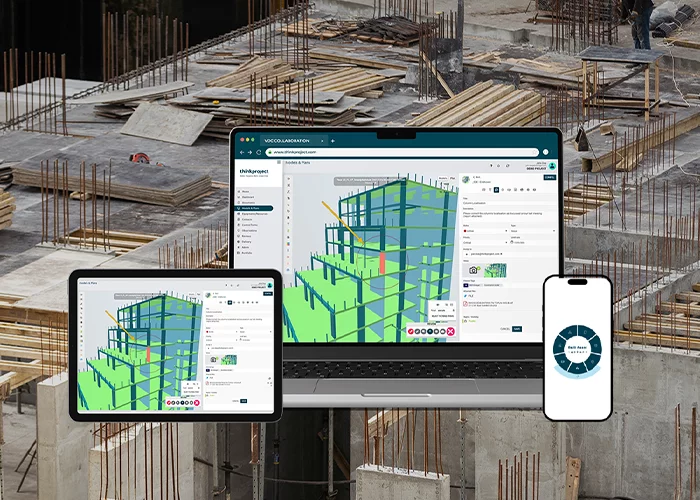
The Thinkproject Platform supports VDC workflows through connected solutions designed for both technical coordination and collaborative project delivery.
- VDC Manager supports BIM management, constructability validation, clash detection, 4D planning, and 5D quantity workflows for complex building and infrastructure projects.
- VDC Collaboration provides browser-based model review, issue management, and multidisciplinary coordination workflows that make VDC accessible across broader project teams.
Together, these solutions help organisations coordinate design, construction, and operational information across the built asset lifecycle.
Virtual Design and Construction FAQs
VDC software supports BIM coordination, model validation, 4D planning, 5D cost workflows, and collaborative construction delivery across the asset lifecycle.
VDC stands for Virtual Design and Construction.
No. BIM focuses on digital information modelling, while VDC is a broader project delivery methodology that uses BIM alongside scheduling, cost, coordination, and operational workflows.
4D BIM connects models to time and scheduling information. 5D BIM adds quantity and cost information for forecasting and commercial planning.
Digital platforms supporting VDC workflows help teams manage model coordination, constructability analysis, scheduling, issue management, and lifecycle collaboration across construction projects.
No. VDC provides value on projects of all sizes where coordination complexity, multiple stakeholders, or scheduling and delivery risk exist.
VDC improves handover quality, operational readiness, and lifecycle visibility by creating structured, validated digital asset information.
VDC supports project delivery workflows, while digital twins support operational monitoring and optimisation after handover.
ISO 19650 does not require VDC specifically, but VDC methodologies align closely with ISO 19650 principles for collaborative information management.
More insights
-
Event
Built Asset Lifecycle Platform
Thinkproject Live London 2026
Register nowDiscover how AI and connected data are helping teams reduce risk, improve control, and make faster, smarter decisions across the project lifecycle.
-
Event

Built Asset Lifecycle Platform
Thinkproject Live Events 2026
Read moreJoin construction, infrastructure, and asset management leaders for a day focused on the future of project and asset delivery.
-
Blog
Asset Management
Asset lifecycle management in construction: From planning to decommissioning
Read moreLearn how asset lifecycle management connects planning, construction, handover, operations and maintenance to improve built asset performance.
-
Blog

BIM
Browser-based BIM viewer performance: 10 factors that affect large IFC models
Read moreDiscover what impacts browser-based BIM viewer performance - from geometry and IFC file quality to client hardware and network. A technical guide for BIM teams.
-
Blog

BIM
8 best BIM collaboration software systems for construction teams
Read moreExplore the best BIM collaboration software systems, from CDEs and model coordination to issue tracking, document control, field collaboration, and handover.
-
Blog
CDE
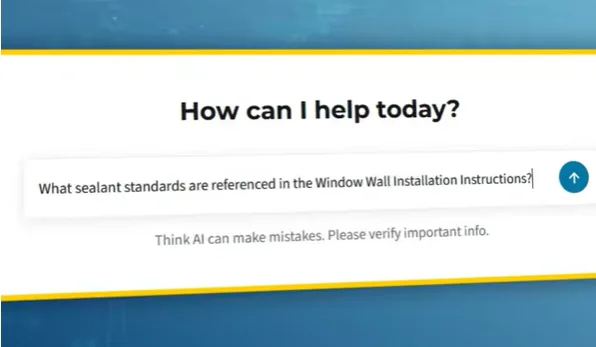
AI Search in NextGen CDE: How Thinkproject AI turns governed construction data into confirmed answers
Read moreDiscover how AI search in a NextGen CDE helps construction teams find current, approved project information while preserving permissions and control.
-
Blog

Digitalization
Construction business intelligence: Turning data into better decisions
Read moreLearn how construction business intelligence connects project data, improves reporting and supports better decisions across the asset lifecycle.
-
Blog

Contracts
Best construction contract management software: 11 features to look for
Read moreCompare the key features to look for in construction contract management software, from NEC, JCT and FIDIC workflows to audit trails and risk control.
-
Blog
Contracts
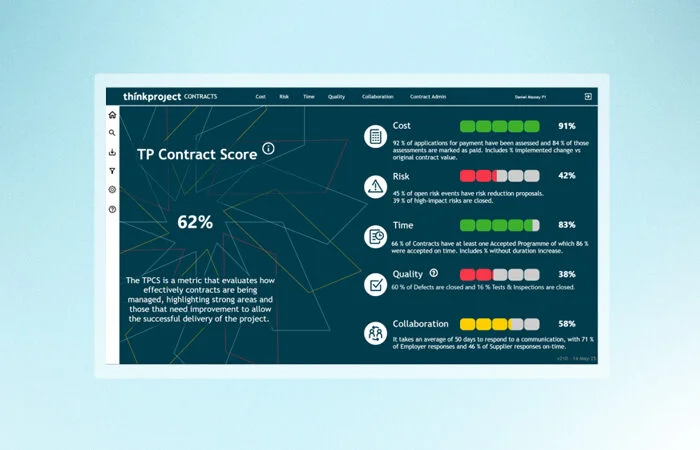
JCT contract types: Choosing and managing the right contract
Read moreCompare the main JCT contract types, understand construction management contracts and learn how to choose and administer the right form.