
Construction handover management: Procedure, plan and checklist
Construction handover management is more than the final step in a construction project. It’s the process of ensuring the completed built asset, together with all the information needed to operate and maintain it, is transferred accurately, efficiently and with minimal risk. A structured approach helps avoid delays, reduces rework and gives owners confidence that they’re receiving complete, reliable information from day one.
In this guide, we’ll explain the construction project handover procedure, the difference between handover and project closeout, and the essential construction site handover checklist for a successful transition into operations.
What construction handover management includes
Construction handover management is the process of preparing, validating and transferring the information required to move a completed asset from construction into operation. It ensures owners and facilities teams receive accurate, complete and accessible documentation alongside the physical asset, reducing delays, compliance risks and future maintenance issues.

A typical construction handover includes:
- Approved as-built drawings and models
- Operation and maintenance (O&M) manuals
- Asset registers and equipment data
- Test results, commissioning records and certificates
- Warranties and compliance documentation
- Training for facilities and operational teams
- Final inspections, snagging and defect resolution
- Formal acceptance and transfer of responsibility
Managing these activities through a centralised process helps ensure information is complete, traceable and ready for long-term asset management, rather than being gathered at the end of the project.
Construction project handover procedure
A successful construction project handover doesn’t begin during the final weeks of a project. It starts at the outset, with clearly defined information requirements, structured processes and ongoing collaboration between project teams, contractors and future operators.
Rather than treating handover as a final administrative exercise, leading organisations manage it as a continuous process throughout the project lifecycle. Documents, asset information and compliance records are collected, reviewed and validated as work progresses, reducing pressure at project completion and improving the quality of the final handover. Here are the key steps for managing a smoother, lower-risk handover process:
1. Define handover requirements at the start of the project
Effective construction handover management begins long before practical completion. At the start of the project, define exactly what information the client or operator will require, including asset data, operation and maintenance manuals, certificates, warranties, commissioning records and as-built documentation. Establishing these requirements early gives every contractor and supplier clear expectations, reducing the risk of missing or inconsistent information later. Where possible, standardise templates, naming conventions and validation rules so information can be reviewed consistently throughout the project rather than being corrected under pressure at the end.
2. Build the construction project handover plan
Once the requirements are defined, develop a construction project handover plan that sets out responsibilities, milestones and deadlines for every stage of the process. The plan should identify who is responsible for providing each document or dataset, when information must be submitted and how it will be validated and how readiness will be tracked.
Integrating handover activities into the wider project programme helps avoid a last-minute rush before completion and gives project teams visibility of potential issues early enough to resolve them.
3. Collect handover documents throughout construction
One of the biggest causes of delayed handovers is leaving document collection until the end of the project. Instead, gather and review information continuously as construction progresses. As-built drawings, inspection records, product data sheets, warranties and commissioning documents should be uploaded, checked and approved as soon as they become available.
Managing documentation through a centralised Common Data Environment (CDE) helps ensure everyone works from the latest approved information while providing a complete audit trail of changes, approvals and document versions. This significantly reduces the time needed to prepare the final handover package and supports a continuous handover approach throughout delivery.
4. Complete final inspections, snagging and defect closeout
Before handover can take place, the completed works should be inspected to confirm they meet contractual and quality requirements. This includes final quality inspections, snagging activities and the resolution of any outstanding defects.
Not every issue will necessarily be closed before handover, but any remaining defects should be documented clearly, assigned to the responsible party and tracked through the defects liability period. Maintaining complete records of inspections and corrective actions also provides valuable evidence if disputes arise later.
5. Commission building systems and verify asset data
Commissioning confirms that building systems perform as intended and are ready for operational use. At the same time, project teams should verify that all associated asset information is complete, accurate and linked to the correct equipment. This includes checking serial numbers, maintenance requirements, manufacturer information and supporting documentation. Validating asset data alongside commissioning activities reduces the risk of incomplete records entering operational systems and ensures facilities teams have reliable information from the first day of operation.
6. Prepare the handover documentation pack
The handover documentation pack brings together all the information required for the owner or operator to manage the asset effectively. Depending on the project, this may include approved as-built drawings, operation and maintenance manuals, asset registers, commissioning certificates, warranties, compliance documentation and training records.
Rather than delivering multiple disconnected files, organisations increasingly structure this information around assets and operational requirements, making it easier to locate relevant documentation throughout the asset lifecycle. Centralised document management also helps ensure only approved, current information is included in the final handover package.
7. Train facilities teams and end users
Even the most comprehensive handover documentation has limited value if operational teams do not understand how to use it. Before the asset is handed over, provide appropriate training for facilities managers, maintenance teams and end users covering building systems, safety procedures, maintenance requirements and digital documentation. Recording attendance and training materials as part of the handover process also provides evidence that operational teams have received the information needed to manage the asset safely and effectively.
8. Transfer site access, utilities and operational responsibility
Once construction activities have finished, responsibility for the site must be formally transferred to the owner or operator. This includes handing over keys, security credentials, access permissions, utility accounts, emergency procedures and any remaining operational documentation. Clearly documenting the transfer of responsibilities helps avoid confusion over ownership, maintenance obligations and liability after practical completion.
9. Get formal sign-off and move into the defects period
The final stage is obtaining formal acceptance from the client or asset owner that the agreed handover requirements have been met. This sign-off marks the transition from project delivery into the defects’ liability period, warranty period or equivalent post-handover phase, during which any remaining issues can be addressed under the terms of the contract.
Even after handover, maintaining access to validated project information, inspection records and asset documentation provides an important foundation for ongoing maintenance, compliance and future asset management.
Although the details vary between projects and contract types, following a structured process helps reduce delays, improve document quality and ensure operational teams receive complete, validated information when the asset changes hands.
Construction handover vs project closeout
The terms construction handover and project closeout are often used interchangeably, but they refer to different parts of the project lifecycle. Understanding the distinction helps teams allocate responsibilities, manage expectations and avoid confusion during project completion.
Project closeout is the broader process of completing all contractual, commercial and administrative obligations before a project is formally closed. Construction handover is one part of that process and focuses specifically on transferring the completed asset, together with the information needed to operate, maintain and manage it safely.
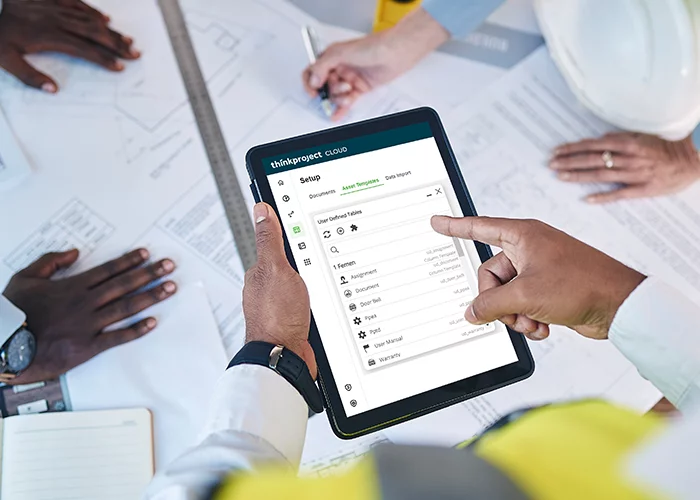
| Construction project closeout | Construction handover |
|---|---|
Covers the overall completion of the project | Focuses on transferring the completed asset to the owner or operator |
Includes final accounts, contract completion and administrative tasks | Includes asset information, documentation and operational readiness |
Confirms contractual obligations have been fulfilled | Confirms the owner has the information needed to operate and maintain the asset |
May continue after practical completion | Usually takes place at or around practical completion |
Involves commercial, legal and project management teams | Involves project teams, contractors, commissioning teams and facilities managers |
Although handover forms part of project closeout, modern construction projects require far more than delivering drawings and operation manuals. Owners increasingly expect structured asset data, linked documentation, certificates and maintenance information that can be reused throughout the asset lifecycle.
Centralised document management and governed information workflows help reduce risk, improve traceability and create a stronger foundation for long-term asset management. Thinkproject’s NextGen CDE and HANDOVER solutions support this by providing controlled document management, validation workflows and lifecycle-ready asset information throughout project delivery.
Construction site handover checklist
A successful construction site handover relies on thorough preparation rather than a last-minute document review. Completing key activities throughout the project helps reduce delays, improve information quality and ensure the asset is ready for safe, efficient operation.
Here is an example of a construction site handover checklist to confirm that all essential tasks have been completed before formal handover.
Construction site handover checklist
✓
☐ All construction work has been completed in accordance with the contract.
☐ Final inspections and snagging activities have been completed.
☐ Outstanding defects have been resolved or formally recorded.
☐ Building systems have been commissioned and tested.
☐ Approved as-built drawings and models have been finalised.
☐ Asset registers have been completed and validated.
☐ Operation and maintenance (O&M) manuals have been provided.
☐ Warranties, certificates and compliance documentation have been collected.
☐ Equipment manuals and manufacturer information have been submitted.
☐ Required training has been delivered to facilities and operational teams.
☐ Keys, access credentials and security systems have been transferred.
☐ Utilities and operational responsibility have been formally transferred.
☐ All contractual handover requirements have been met.
☐ The client has completed the final review and signed the handover documentation.
A digital checklist is even more effective when it’s linked to live project information rather than maintained as a standalone spreadsheet. Centralising documents, approvals and asset information allows project teams to monitor handover readiness in real time, identify missing information early and maintain a complete audit trail throughout the process.
This reduces project risk while giving owners greater confidence that the asset is ready for operation. Thinkproject’s HANDOVER supports this by tracking handover progress against predefined information requirements and validating asset data before it is transferred into operations.
7 challenges of a successful handover management
Although a vital task, information handover does not come without challenges. From files stored in the wrong format, to having several versions of the same file – contractors can earnestly say that they have met some odd situations in their time.
The complexity of construction projects and the fact that there are usually many stakeholders involved may lead to the handover process being slowed down or stopped for various reasons, such as:
Misinterpretation of data requirements
Asset owners sometimes have their own interpretation of contractual requirements, which may not align with the project’s data.
Data integration issues
There’s a lack of planning for how to integrate the project’s data into the asset management system.
Expectations from the supply chain
Asset owners often rely on contractors to supply all necessary data, which isn’t always feasible.
Lack of skilled data professionals
There’s a shortage of professionals with the required data skills, complicating the handover.
Absence of asset management teams
Often, asset management teams are not involved early enough to define data requirements.
Inconsistent
data standards
Different stakeholders may have their own data models, leading to costly adjustments.
Data handover left until the very end
Waiting until the final stages to transfer data can lead to frustration and delays.
How digital construction handover management reduces project risk
Many handover challenges can be traced back to one issue: fragmented information.
When documents, asset data and approvals are spread across emails, spreadsheets and shared drives, it becomes difficult to track progress, identify missing information and demonstrate compliance. The result is often delayed project completion, increased rework and greater operational risk.
Digital construction handover management replaces these disconnected processes with a structured, centralised approach. Instead of collecting information at the end of the project, teams can define handover requirements from the outset, capture documents and asset data throughout delivery, and validate information before it reaches the client or operator.
This approach offers several key benefits:
- A single source of truth for documents, drawings and asset information.
- Continuous validation to identify missing or incomplete information before project closeout.
- Greater visibility into handover readiness across contractors, disciplines and asset groups.
- Complete traceability through version control, approval workflows and audit trails.
- A smoother transition into operations by providing facilities teams with accurate, structured and accessible information from day one.
Construction handover management is no longer just about delivering a folder of documents at the end of a project. As projects become more complex and owners expect higher-quality asset information, successful handovers depend on structured processes, continuous validation and centralised document management.
How Thinkproject supports the handover process
Thinkproject supports this approach through its Built Asset Lifecycle Platform:
- NextGen CDE provides a governed environment for managing project documents, workflows and approvals, ensuring teams always work with controlled, traceable information.
- HANDOVER builds on this foundation by enabling organisations to define asset information requirements, validate handover datasets continuously and track readiness throughout project delivery.
Rather than relying on a last-minute document collection exercise, project teams can deliver complete, lifecycle-ready information that supports operational readiness from the moment the asset is handed over.
Looking to improve your construction handover process?
Discover how Thinkproject helps project teams centralise documentation, validate asset information and manage digital handover across the entire built asset lifecycle. Learn more about HANDOVER and see how a continuous, information-driven approach can help reduce project risk and improve operational readiness.
More insights
Innovation Series
Built Asset Lifecycle Platform
Thinkproject Live and Recorded Webinars
Read moreLive and recorded webinars for teams that design, build, operate, and maintain the assets that shape our physical world.
-
Blog
BIM
BIM collaboration: How connected project teams work better together
Read moreSee how BIM improves construction collaboration through shared models, clash detection, issue tracking, CDE workflows and connected project information.
-
Blog
Asset Management
From delivery to lasting performance: four governance priorities for Spain’s asset owners
Read moreDiscover four asset governance priorities that help Spain’s asset owners improve information reliability, flexibility, decision speed and ROI.
-
Blog
Built Asset Lifecycle Platform
Construction project life cycle: 6 phases from concept to handover
Read moreUnderstand the construction project life cycle, from feasibility and design to procurement, construction, commissioning and handover.
-
Blog

Field Management
Thinkproject HANDOVER: Turn project information into operations-ready asset data
Read moreDiscover how Thinkproject HANDOVER helps asset owners and contractors reduce information gaps and deliver validated asset data from construction into operations.
-
Event

Built Asset Lifecycle Platform
Thinkproject Live London 2026
Join the waitlistDiscover how AI and connected data are helping teams reduce risk, improve control, and make faster, smarter decisions across the project lifecycle.
-
Event

Built Asset Lifecycle Platform
Thinkproject Live Events 2026
Read moreJoin construction, infrastructure, and asset management leaders for a day focused on the future of project and asset delivery.
-
Blog

Asset Management
Asset lifecycle management in construction: From planning to decommissioning
Read moreLearn how asset lifecycle management connects planning, construction, handover, operations and maintenance to improve built asset performance.
-
Blog

BIM
Browser-based BIM viewer performance: 10 factors that affect large IFC models
Read moreDiscover what impacts browser-based BIM viewer performance - from geometry and IFC file quality to client hardware and network. A technical guide for BIM teams.