From delivery to lasting performance: four governance priorities for Spain’s asset owners
Spain’s investment momentum raises an immediate question for asset owners: can every team find, trust and act on the information needed to support faster decisions and sustained performance?
€205.2bn
construction-sector turnover in 2024
INE
€85.1bn
planned transport-infrastructure actions, 2024–2035
SENER / SEOPAN
€308bn
expected energy-transition investment to 2030
PNIEC
Spain is entering a consequential period for the built environment. Construction-sector turnover reached €205.2 billion in 2024, up 6.6% year on year, according to Spain’s National Statistics Institute. A Sener study commissioned by SEOPAN identifies €85.1 billion in planned transport-infrastructure actions between 2024 and 2035. Separately, Spain’s updated National Energy and Climate Plan anticipates €308 billion of energy-transition investment through 2030, with 82% expected from private sources.
Across construction, transport and the energy transition, these indicators demonstrate the breadth of investment shaping Spain’s built environment. For asset owners, the opportunity is not only to deliver more infrastructure, but to ensure that the information created today remains trusted, connected and usable throughout the asset lifecycle—supporting better decisions, stronger control and sustained performance.
The foundation for lasting performance is built today.
The performance opportunity starts before handover
Long-term asset performance can sound like a future operations issue. For project leaders and asset owners, it is already an immediate delivery issue. Teams need to know which drawing is approved, why a decision was taken, whether a contractual obligation has been met, what evidence supports compliance and which information must be transferred into operations.
When those answers sit across disconnected systems, inboxes and supplier environments, people spend time searching, reconciling and validating before they can act. The result can be delayed approvals and decisions, avoidable rework and higher delivery costs, greater exposure to missed contractual milestones or penalties, weaker auditability and an incomplete record at handover.
The scale of the opportunity is measurable. KPMG’s 2023 Global Construction Survey, drawing on insights from almost 300 project owners and engineering and construction leaders, found that only half of owners’ projects were meeting completion deadlines. In the same survey, 37% of respondents said ineffective risk management had contributed to missed budget and/or schedule targets.
Asset governance is how owners maintain control of the information, decisions, obligations and evidence behind an asset, from delivery into operation. It does not replace engineering or operational expertise; it gives those teams the trusted context they need to act faster and with greater confidence. Four priorities make that discipline relevant to the business now: information reliability, flexibility, speed and return on investment. Together, they create the information foundation for lasting asset performance.
1. Information reliability: establish a trustworthy foundation
Reliability begins with confidence in the information used to make decisions. Asset owners need a governed environment for documents, correspondence, contracts, approvals and evidence, with authoritative records, clear version control, permissions and audit trails.
Here, reliability starts with the information behind every asset decision: ensuring that the right people can access the latest authorised record, understand its status and trace how it changed. That foundation supports compliance, reduced dispute exposure, controlled and operations-ready handover, and credible reporting. It also determines whether analytics and AI can produce useful outputs. Faster answers built on incomplete or uncontrolled information simply create faster uncertainty.
→ What to do now: Identify the records that support your highest-risk decisions and test whether their owner, status, approval history and access rights are unambiguous.
2. Flexibility: adapt without losing control
Infrastructure programmes change. Delivery models evolve, partners join and leave, regulatory requirements develop and asset teams inherit systems selected years earlier. Governance must be consistent without becoming rigid.
A connected, modular approach allows organisations to start with the workflow causing the greatest friction (document control, contract management, field processes or handover) and expand as priorities change. Common governance rules can remain in place while teams use capabilities suited to their role and phase. This helps owners avoid the false choice between a single inflexible system and an uncontrolled collection of point tools.
→ What to do now: Choose one high-friction workflow and define what must remain consistent across teams: data structure, decision rights, approvals, evidence and the final operational record.
3. Speed: shorten the path from information to decision
Speed should not be reduced to ‘building faster’. For asset owners, the more valuable opportunity is to reduce the time spent looking for information, switching between systems, checking versions and reconstructing context.
When documents, workflows and decisions are connected, teams can review submissions, answer queries, prepare reports and escalate issues with less manual effort. AI-assisted search and document summarisation can help teams find trusted answers faster while respecting permissions, provenance and traceability. Thinkproject is also extending agentic capabilities across the platform to support more complex, multi-step workflows, while decisions and approvals remain under human control. The goal is not automation for its own sake; it is faster, better-supported decisions without sacrificing accountability.
→ What to do now: Baseline the time required to locate an approved record, complete a common review and produce a recurring report. Those measures create a credible starting point for improvement.
4. ROI: recover effort and protect asset value
The return on asset governance is broader than a software saving. It can come from less time spent searching and validating, fewer duplicate tools, shorter approval cycles, reduced rework and delay-related costs, the potential to reduce exposure to missed milestones and contractual penalties, more complete handover and better retention of knowledge when people or suppliers change.
Some benefits can be quantified within a project; others appear as avoided risk and stronger performance over the asset lifecycle. The strongest business cases connect both. They establish a baseline, target specific workflows and measure adoption alongside operational outcomes. That makes ROI a consequence of better governance,—not an abstract promise attached to digitalisation.
→ What to do now: Track a small, defensible set of indicators: search time, approval-cycle duration, reporting effort, duplicate-system cost, handover exceptions and avoidable rework.
Five actions asset owners can take now
A connected foundation – not another point solution
Thinkproject provides a shared operating platform for the built asset lifecycle, bringing together applications, governed information and AI across design, delivery, handover and operations. Its capabilities span common data environments, VDC collaboration, field and contract management, handover, asset and work management, and analytics, all supported by platform services and connections to existing systems.
Thinkproject AI adds AI-assisted capabilities within this governed context and extends the platform towards agentic automation across applications and workflows. The business value is not the number of features. It is how the platform helps preserve context as information moves between organisations and phases, while allowing teams to begin with a priority workflow and extend their use over time. That combination supports dependable information, organisational flexibility, faster decisions and measurable value without losing accountability.
As Spain invests in transport, energy, utilities and the wider built environment, owners have an opportunity to treat information as part of the asset, and not as an administrative by-product of delivery. The owners who build that foundation now can reduce information friction during delivery, hand over with greater confidence and give operations teams a trusted asset history from day one. That is how an immediate business need becomes the foundation for lasting asset performance.
Reliable information today. Stronger asset performance for the long term.
More resources
-
Blog
Built Asset Lifecycle Platform
Construction project life cycle: 6 phases from concept to handover
Read moreUnderstand the construction project life cycle, from feasibility and design to procurement, construction, commissioning and handover.
-
Blog

Field Management
Thinkproject HANDOVER: Turn project information into operations-ready asset data
Read moreDiscover how Thinkproject HANDOVER helps asset owners and contractors reduce information gaps and deliver validated asset data from construction into operations.
-
Event

Built Asset Lifecycle Platform
Thinkproject Live London 2026
Join the waitlistDiscover how AI and connected data are helping teams reduce risk, improve control, and make faster, smarter decisions across the project lifecycle.
-
Event

Built Asset Lifecycle Platform
Thinkproject Live Events 2026
Read moreJoin construction, infrastructure, and asset management leaders for a day focused on the future of project and asset delivery.
-
Blog

Asset Management
Asset lifecycle management in construction: From planning to decommissioning
Read moreLearn how asset lifecycle management connects planning, construction, handover, operations and maintenance to improve built asset performance.
-
Blog

BIM
Browser-based BIM viewer performance: 10 factors that affect large IFC models
Read moreDiscover what impacts browser-based BIM viewer performance - from geometry and IFC file quality to client hardware and network. A technical guide for BIM teams.
-
Blog

BIM
8 best BIM collaboration software systems for construction teams
Read moreExplore the best BIM collaboration software systems, from CDEs and model coordination to issue tracking, document control, field collaboration, and handover.
-
Blog
CDE
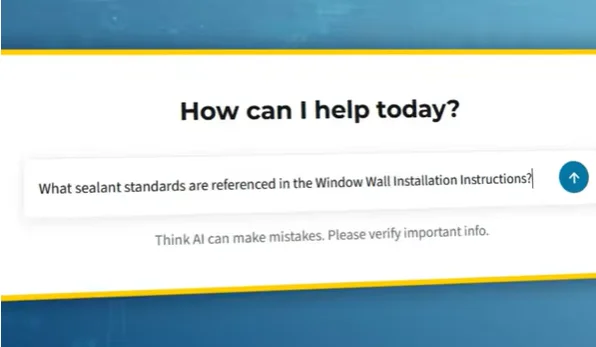
AI Search in NextGen CDE: How Thinkproject AI turns governed construction data into confirmed answers
Read moreDiscover how AI search in a NextGen CDE helps construction teams find current, approved project information while preserving permissions and control.
-
Blog

Digitalization
Construction business intelligence: Turning data into better decisions
Read moreLearn how construction business intelligence connects project data, improves reporting and supports better decisions across the asset lifecycle.