
Construction business intelligence: Turning data into better decisions
Construction projects generate and use vast amounts of data: cost plans, schedules, contracts, drawings, BIM models, field inspections, quality records, etc. All this data can be used by teams to understand performance and improve decision-making. But in reality, things are often not that easy. Data can be spread across projects, organisations and custom systems. Different teams can use different definitions for the same metric.
Construction business intelligence (BI) addresses this challenge by bringing relevant data together, establishing consistent measures and presenting information in a form that people can use. Instead of simply producing more reports, BI helps construction organisations understand what is happening, why it is happening and where attention is needed.
The opportunity extends beyond individual projects. When information is connected across delivery, handover and operations, business intelligence can support decisions throughout the built asset lifecycle. This creates a stronger foundation for portfolio oversight, risk management and, increasingly, predictive and AI-assisted insights.
What is construction business intelligence and how does it work?
Construction business intelligence is the process of collecting, connecting, analysing and presenting construction and built asset data to support better decisions.
Traditional reporting often looks backwards. A team gathers information from several sources, reconciles it and creates a report describing what has already happened. BI builds on reporting by creating a more consistent analytical view of performance. Decision-makers can examine trends, compare projects or assets, identify deviations and explore the information behind an indicator.

In practice, business intelligence for the construction industry can bring together data from areas such as:
- cost, payments and commercial management
- project schedules and progress
- contracts, changes and contractual risk
- documents and approval workflows
- BIM and model coordination
- quality, safety, health and environmental processes
- field activities and inspections
- handover and asset information
- maintenance and operational work.
The value does not come from putting every available data point onto a dashboard. It comes from connecting relevant information to the decisions people need to make.
This requires several steps:
- Organisations need reliable source data. If project information is incomplete, duplicated or poorly governed, analytics can reproduce those weaknesses at scale. Controlled processes for information management, approvals, contractual events and field data therefore provide an important foundation.
- Information from different sources needs common context. A cost movement, schedule event, field observation or contractual change becomes more useful when it can be understood in relation to the relevant project, contract or asset.
- Metrics need consistent definitions. Portfolio comparisons have limited value if one project calculates progress or risk differently from another. Shared definitions allow decision-makers to compare performance with greater confidence.
- Information needs to be presented at the right level. An executive may need a portfolio view of cost, time and risk, while a project manager needs to understand the specific issues driving a deviation. Effective BI should therefore allow users to move from a high-level indicator towards the underlying context.
This is why data trust is central to effective project controls reporting. A visually impressive dashboard cannot compensate for inconsistent or poorly governed information.
Where construction business intelligence improves performance

The practical value of BI becomes clearer when it is connected to real construction decisions. Rather than treating analytics as a separate management exercise, organisations can use it to strengthen the processes that already determine project and asset outcomes.
The following areas show where business intelligence in the construction industry can have a particularly important role.
Cost, cash flow and profitability control
Construction projects involve continuous financial movement. Budgets evolve, contracts change, payments progress and new risks emerge. Understanding the current commercial position requires more than comparing planned and actual expenditure.
Construction business intelligence can give commercial and project teams a more connected view of cost performance. Data from contracts, changes, payments, forecasts and delivery activities can be analysed together to show where financial exposure is developing.
For example, an increase in forecast cost may become more meaningful when viewed alongside unresolved contractual events, programme delays or repeated field issues. Instead of looking at each source independently, teams can investigate their relationship.
At portfolio level, consistent measures can also help leaders compare projects and contracts. This can highlight where cost deviations are concentrated, where commercial processes require attention or where supplier performance differs across projects.
The aim is not simply faster financial reporting. It is earlier understanding of the factors affecting financial performance, giving teams more time to respond.
Programme progress and delivery confidence
Schedules describe the intended route to completion. Actual delivery is more complex.
Progress can be affected by design changes, late approvals, unresolved model issues, contractual events, quality problems and site constraints. When these signals remain in separate systems, scheduled reporting can provide only part of the picture.
Business intelligence can connect programme information with supporting project data to create a broader view of delivery confidence.
Teams might analyse trends in workflow completion, outstanding approvals, model coordination issues or contractual events alongside programme milestones. A delay to one activity may appear manageable in isolation, but the surrounding data could show a growing pattern of unresolved dependencies.
Model-based processes can add further context. Connecting BIM data with schedules enables 4D analysis, helping teams visualise construction sequences, identify potential risks and improve planning. Model-based quantity information can also support 5D workflows and strengthen cost insight.
The result is a move from asking, “Are we currently on schedule?” towards asking, “What evidence tells us whether the current schedule remains achievable?”
Resource, procurement and supply chain performance
Construction delivery depends on interconnected organisations. Designers, contractors, subcontractors, suppliers, consultants and asset owners all contribute information and actions that influence performance.
BI can help organisations understand those relationships more clearly.
Procurement and supply chain analysis may include contract performance, changes, approvals, payment processes, deadlines and risk. Standardised information across contracts can make it easier to identify recurring issues or compare supplier performance across a portfolio.
Resource decisions can also benefit from better visibility. When leaders can see where workload, outstanding actions and emerging delivery risks are concentrated, they can make more informed decisions about where management attention or specialist support is required.
This does not mean that a dashboard can automatically determine why a supplier or project is performing differently. Context still matters. The role of BI is to make patterns visible and provide a reliable starting point for investigation.
This becomes more practical when organisations connect data across construction systems rather than relying on repeated manual consolidation.
Risk, quality, safety and compliance
Many construction risks appear first as small operational signals.
An inspection identifies a recurring defect. An approval remains outstanding. A contractual deadline approaches. Similar quality issues occur across several work packages. Individually, each event may be manageable. Together, they may indicate a wider problem.
Construction business intelligence helps organisations aggregate and analyse these signals.
Field workflows can provide structured information from inspections, quality checks and safety processes. Contract management can provide visibility of obligations, early warnings and changes. Governed document processes can show approval status and information history. Bringing these sources into a consistent analytical view can make trends and deviations easier to identify.
Traceability is particularly important here. Decision-makers need to understand where an indicator comes from and, where appropriate, investigate the records behind it. Analytics based on governed, auditable data therefore provide a stronger basis for action than figures that have been repeatedly copied between spreadsheets.
The same principle applies to compliance. Reporting should not be an isolated exercise completed after work has happened. When evidence is captured through structured workflows, compliance information can become part of day-to-day performance management.
Portfolio and built asset lifecycle performance
The value of BI grows when organisations move beyond individual projects.
Asset owners may manage dozens or hundreds of projects, contracts and operational assets. Without common data structures and definitions, comparing performance across that portfolio becomes difficult. Leaders can spend significant time reconciling reports before they can begin analysing what the information means.
Portfolio analytics can provide consolidated views across projects, contracts and assets. Users can compare trends, thresholds and deviations before drilling down into the relevant context.
The lifecycle perspective is equally important.
Information created during design and construction can have value long after practical completion. Validated asset information, handover records, inspection histories and operational work data can support decisions about asset condition, maintenance and investment priorities.
Maintaining this continuity requires an asset-centric approach. Information from different source systems needs to remain connected to the asset it describes without necessarily replacing those systems. A consistent asset context can then support portfolio analysis throughout delivery and operations.
In this way, business intelligence for construction becomes more than project reporting. It can help organisations understand the performance of built assets over time.
What construction organisations need to implement BI successfully
Technology is only one part of a successful BI strategy. Dashboards and analytical tools cannot resolve fundamental problems with data ownership, definitions or governance.
Organisations first need to understand the decisions BI should improve. Starting with a clear business question keeps implementation focused. Which risks need to be visible earlier? Which reports consume the most manual effort? Which portfolio decisions currently depend on inconsistent information?
From there, several foundations matter:
- Governed information is essential. Documents, workflows and records need appropriate controls for versions, approvals, access and traceability. A Common Data Environment (CDE) can provide a controlled environment for project information, helping teams work with approved and traceable records. This creates a stronger basis for analytics than disconnected files and informal exchanges.
- Consistent definitions are equally important. Organisations need agreement on what their key metrics mean, how they are calculated and which sources are authoritative. Otherwise, different dashboards can provide different answers to the same question.
- Connected context is the next requirement. Construction organisations often need data from multiple project and enterprise systems. The objective should not necessarily be to replace every source application. A more practical approach can be to connect information while retaining clear ownership of the source record.
- Access and accountability also matter. Different users need different information, and sensitive project or commercial data must remain permissioned. Central identity, role management and traceability help organisations expand analytics without weakening governance.
Finally, implementation should be iterative. A construction organisation does not need to solve every data problem before gaining value from BI. Starting with a defined use case, establishing trusted metrics and then extending the approach across connected workflows can be more manageable than attempting enterprise-wide transformation in one step.
From retrospective reporting to predictive construction intelligence
Traditional reporting tells organisations what has happened. More mature analytics help explain what is happening now and where performance is moving. The next step is using patterns in governed data to support earlier, more forward-looking decisions.
This is where predictive analytics and AI in construction become relevant.
If an organisation has consistent historical and current information, analytical models can potentially help identify trends, deviations and emerging risks that would be difficult to detect manually. Instead of waiting for a threshold to be exceeded, teams can focus attention on signals that suggest performance may deteriorate.
The progression can be understood as four broad levels:
- Descriptive intelligence: What happened?
- Diagnostic intelligence: Why did it happen?
- Predictive intelligence: What may happen next?
- Decision support: What should people investigate or consider doing?
The quality of each level depends on the quality of the underlying information.
AI does not remove this dependency. In fact, it makes information governance more important. AI-assisted analysis needs the right context, permissions and traceability if organisations are to use its outputs responsibly.
Thinkproject’s approach reflects this principle. ANALYTICS is designed to aggregate and contextualise approved, governed data from connected Thinkproject solutions, providing cross-solution dashboards, portfolio views and visibility of trends and deviations. Its AI-assisted exploration is advisory, with decisions remaining with users.
The wider Thinkproject Platform similarly provides shared identity, governance and connected project and asset context as a foundation for AI-assisted work on permissioned, traceable data.
This distinction matters. Predictive construction intelligence should support professional judgement rather than replace it. Construction decisions involve contractual, engineering, commercial and operational contexts that cannot be reduced to a single algorithmic recommendation. The most useful role for AI is therefore to help people find relevant information, recognise patterns and investigate potential issues earlier.
Build better decisions into every stage of the built asset lifecycle
Construction business intelligence is ultimately about improving the connection between information and action.
- For project teams, that can mean understanding cost, programme, risk and quality with greater confidence.
- For commercial teams, it can mean clearer visibility of contractual events and exposure.
- For executives, it can mean consistent portfolio oversight without repeated manual consolidation.
- For asset owners and operators, it can mean maintaining useful information from delivery into handover and operations.

Achieving that requires more than a collection of dashboards. Organisations need governed information, consistent definitions, connected systems and lifecycle context. They also need analytical tools that allow people to move from high-level indicators to the evidence behind them.
The Thinkproject Platform is designed around this connected approach. It brings together governed project information, models, contracts, field processes, handover and asset context, while ANALYTICS provides a platform-wide capability for reporting, dashboards, portfolio analytics and governed AI-assisted insights. This supports a more consistent view across projects, contracts and assets without creating another isolated reporting silo.
As construction organisations develop their use of BI, the goal should remain straightforward: give the right people reliable information early enough to make a better decision.
See connected construction intelligence in action. Join Thinkproject Live 2026 to explore how connected data, AI and digital workflows can help you make better-informed decisions across the built asset lifecycle.
More resources
Innovation Series
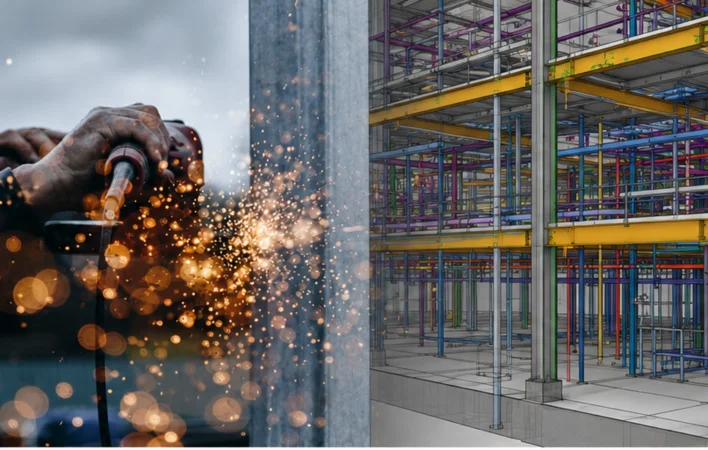
Built Asset Lifecycle Platform
Thinkproject Live and Recorded Webinars
Read moreLive and recorded webinars for teams that design, build, operate, and maintain the assets that shape our physical world.
-
Blog
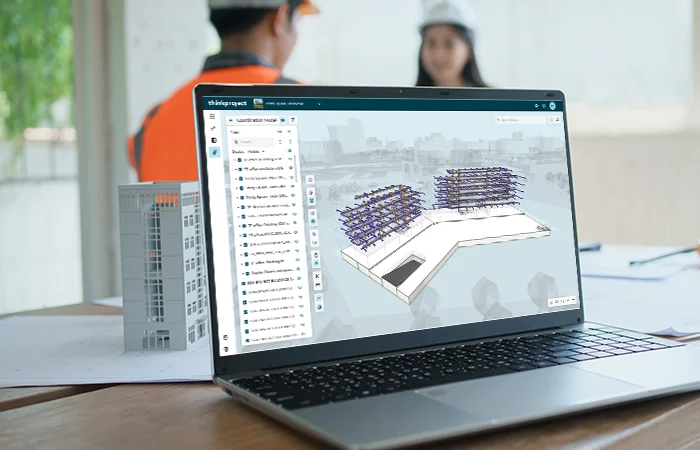
BIM
BIM collaboration: How connected project teams work better together
Read moreSee how BIM improves construction collaboration through shared models, clash detection, issue tracking, CDE workflows and connected project information.
-
Blog
Asset Management
From delivery to lasting performance: four governance priorities for Spain’s asset owners
Read moreDiscover four asset governance priorities that help Spain’s asset owners improve information reliability, flexibility, decision speed and ROI.
-
Blog
Built Asset Lifecycle Platform
Construction project life cycle: 6 phases from concept to handover
Read moreUnderstand the construction project life cycle, from feasibility and design to procurement, construction, commissioning and handover.
-
Blog

Field Management
Thinkproject HANDOVER: Turn project information into operations-ready asset data
Read moreDiscover how Thinkproject HANDOVER helps asset owners and contractors reduce information gaps and deliver validated asset data from construction into operations.
-
Event

Built Asset Lifecycle Platform
Thinkproject Live London 2026
Join the waitlistDiscover how AI and connected data are helping teams reduce risk, improve control, and make faster, smarter decisions across the project lifecycle.
-
Event

Built Asset Lifecycle Platform
Thinkproject Live Events 2026
Read moreJoin construction, infrastructure, and asset management leaders for a day focused on the future of project and asset delivery.
-
Blog

Asset Management
Asset lifecycle management in construction: From planning to decommissioning
Read moreLearn how asset lifecycle management connects planning, construction, handover, operations and maintenance to improve built asset performance.
-
Blog

BIM
Browser-based BIM viewer performance: 10 factors that affect large IFC models
Read moreDiscover what impacts browser-based BIM viewer performance - from geometry and IFC file quality to client hardware and network. A technical guide for BIM teams.