
Best construction contract management software: 11 features to look for
Construction contracts govern every stage of project delivery, from payments and change management to compliance and risk. Choosing the best construction contract management software is about more than replacing manual administration. The right solution helps teams standardise workflows, track contractual obligations, automate approvals, and connect commercial decisions with the wider project environment.
When evaluating contract management software, it can be tempting to compare vendors feature by feature. However, a better approach is to focus on the capabilities that support successful contract management across the entire project lifecycle. This guide explores the eleven features that matter most when selecting construction contract management software.

11 features to look for in the best construction contract management software

Every construction project generates thousands of contractual actions, from notices and payment applications to variations, approvals, and correspondence. The best construction contract management software brings these activities together in a structured, auditable environment that supports commercial teams throughout project delivery.
While every organisation has different priorities, the following capabilities consistently deliver great value across infrastructure, commercial building, and engineering projects.
1. Centralised contract and document control
Every commercial decision relies on accurate information. When contracts, drawings, notices, specifications, correspondence, and supporting documents are stored across multiple systems, teams waste valuable time searching for evidence and increase the risk of working from outdated information.
The best software should provide a single, governed environment where all contract-related information can be accessed, managed and traced confidently. This goes beyond simply storing files. Effective document control should include:
- Version control
- Role-based permissions
- Metadata and structured filing
- Linked correspondence and contractual records
- Complete document history
- Searchable records
A central repository also strengthens collaboration between commercial, project, legal, and site teams. Instead of relying on email attachments or duplicate copies, everyone works from the same approved information.
This becomes particularly important during claims or dispute resolution. A complete, time-stamped history of contractual communications can significantly reduce the effort required to establish what happened, when it happened, who approved each action and what evidence supports it.
Contract management becomes even more effective when connected to a governed Common Data Environment (CDE), allowing contractual evidence to remain linked with approved project information rather than existing in isolation. Thinkproject’s Platform, for example, also provides construction document management, connecting contractual records with controlled project documentation, and creating a connected and governed source of truth for project information across the asset lifecycle.
2. Built-in support for NEC, JCT, and FIDIC workflows
Different contract forms introduce different processes, responsibilities, terminology, approval requirements, and contractual deadlines. Attempting to force every project into the same workflow often creates unnecessary manual work and increases compliance risk.
The best construction contract management software should therefore support established contract forms without requiring teams to redesign their commercial processes.
Depending on your projects, this may include support for:
- NEC early warnings and compensation events
- JCT instructions and variations
- FIDIC notices and claims
- Custom contractual workflows
- Regional contract standards
Importantly, software should guide users through the required process rather than simply acting as a document repository. For example, when an NEC compensation event is raised, the platform should guide users through the required workflow, responsibilities, approvals, deadlines, and associated documentation. This reduces the risk of missed contractual obligations while creating a consistent process across projects.
Flexibility is equally important. Many organisations manage several contract forms simultaneously across different business units or regions. Software should therefore allow configurable workflows while maintaining governance and consistency across the wider portfolio.
3. Notice, obligation, and deadline tracking
Missing a notice period, payment deadline, response date, or contractual milestone can have significant commercial consequences. Yet many organisations still rely on calendar reminders or manual tracking to manage these critical dates.
Software capabilities that help businesses avoid these risks include:
- Automated deadline reminders
- Notice tracking
- Obligation registers
- Escalation workflows
- Assigned ownership
- Status tracking
Rather than expecting commercial managers to remember every contractual requirement, the system should proactively highlight upcoming actions before deadlines are missed.
Visibility is equally valuable for management teams. Instead of reviewing individual contracts manually, commercial leaders should be able to see outstanding notices, overdue actions, pending approvals, and upcoming milestones across an entire portfolio. This creates earlier visibility of contractual risk while reducing dependence on individual memory and manual tracking.
4. Change control for variations and compensation events
Change is inevitable on construction projects. Whether driven by client instructions, design development, unforeseen site conditions, or regulatory requirements, changes affect programme, cost, and contractual obligations. Without a structured process, these changes can quickly become one of the largest sources of commercial risk.
The best contract management software should manage changes as governed contractual events rather than disconnected email conversations or spreadsheets.
Effective change control should include:
- Standardised variation workflows
- Compensation event management
- Linked cost and time impacts
- Supporting documentation
- Approval status tracking
- Full audit history
Each change should remain connected to the relevant contract, supporting evidence, commercial assessment, approvals, and final outcome.
This creates a transparent process that improves accountability while reducing disputes over incomplete records or missing approvals.
Importantly, change management should also connect with wider project information and delivery processes. When contractual events are linked with project documentation, field records, approvals, and commercial reporting, organisations gain a much clearer understanding of how change affects project performance.
5. Approval workflows that match commercial authority levels
Construction contracts involve a constant flow of commercial decisions. Payment applications, variations, compensation events, instructions, and contractual notices often require approval from multiple stakeholders before they can progress. When these approvals are managed through email or manual sign-offs, delays become common and accountability can quickly become unclear.
A contract management solution should provide configurable approval workflows that reflect an organisation’s governance model rather than forcing teams to work around rigid processes.
Key capabilities include:
- Multi-stage approval workflows
- Role-based approvals
- Delegation of authority
- Automated notifications and reminders
- Escalation rules for overdue actions
- Real-time approval status
This ensures that the right people review the right decisions at the right time while maintaining consistent governance across projects.
Equally important, approval workflows should be flexible enough to support different contract values, project types, or regional requirements. A low-value variation may require a single approval, while a significant commercial event could require multiple reviews from commercial, legal, and executive teams.
6. Commercial control over cost, payments, and contract value
Effective contract management is closely linked to financial performance. Without clear visibility of approved variations, payment applications, contractual entitlements, and remaining contract value, commercial teams struggle to forecast accurately and respond quickly to emerging risks.
The best contract management software construction organisations adopt should connect contractual activity directly to commercial performance. Look for capabilities such as:
- Payment application management
- Tracking of approved and pending variations
- Contract value monitoring
- Cost and time impact visibility
- Payment workflow automation
- Portfolio-level commercial reporting
Rather than managing payments separately from contracts, the software should link payment processes directly to contractual events and approvals. This provides greater confidence that payments reflect agreed contractual entitlements while reducing the risk of disputes or duplicated work.
7. Audit trails for every action, decision, and document
Construction projects often span several years and involve hundreds of contractual decisions. When questions arise about a payment, instruction, variation, or notice, organisations need clear evidence to demonstrate exactly what happened.
An effective solution should automatically record:
- Document versions
- User activity
- Approval history
- Contractual correspondence
- Time-stamped actions
- Decision records
Rather than relying on individuals to maintain manual records, the system creates a complete history of contractual activity from project start to completion.
This supports much more than dispute resolution. Audit trails also improve internal governance, simplify compliance reviews, strengthen reporting, and help organisations demonstrate adherence to contractual and regulatory requirements.
For organisations working in highly regulated sectors or delivering complex infrastructure programmes, maintaining a defensible record of contractual decisions can significantly reduce commercial risk.
8. Compliance and subcontractor documentation tracking
Construction contracts extend beyond commercial agreements. Projects also depend on certificates, insurance documents, warranties, licences, health and safety records, and subcontractor compliance documentation. Keeping these records current is essential for reducing operational and contractual risk. Compliance management should be a part of day-to-day contract administration rather than a separate manual process.
Useful software capabilities include:
- Document expiry tracking
- Compliance registers
- Mandatory documentation checks
- Automated reminders
- Linked supplier records
- Centralised evidence management
By connecting compliance documentation directly to contracts, organisations gain greater confidence that suppliers continue to meet contractual requirements throughout the project lifecycle.
Automated alerts reduce the likelihood of expired insurance certificates or missing documentation being overlooked, while centralised records simplify audits and supplier reviews.
When compliance information is connected with broader project documentation, commercial teams can make decisions using complete and up-to-date information rather than searching across multiple systems.
9. Reporting dashboards for contract health and project risk
Commercial leaders need more than individual contract records. They need portfolio-wide insight into contractual performance, emerging risks, outstanding obligations, and commercial trends.
Reporting should provide visibility into areas such as:
- Outstanding contractual actions
- Payment status
- Variation performance
- Contractual risk exposure
- Supplier performance
- Portfolio-level trends
Interactive dashboards allow commercial teams to identify issues before they escalate rather than reacting after deadlines have been missed or costs have increased.
The ability to drill down from portfolio-level reporting to individual contract details is particularly valuable for organisations managing multiple projects simultaneously.
Thinkproject CONTRACTS supports reporting across cost, time, risk, quality and collaboration, with portfolio-level visibility into contract and supplier-related performance. When combined with Thinkproject ANALYTICS, organisations can gain cross-project and portfolio-level insights based on governed data rather than manually consolidated spreadsheets.
10. Integrations with CDE, ERP, finance, and project systems
Construction projects rely on many different systems. Contracts, project information, financial data, field records, and enterprise resource planning (ERP) platforms all generate information that influences commercial decisions. If these systems operate independently, teams spend valuable time duplicating data and reconciling conflicting information.
The right construction contract management software fits naturally into the wider digital ecosystem rather than creating another isolated application.
Key integration capabilities include connections with:
- Common Data Environments (CDE)
- ERP and finance platforms
- Project management software
- Document management systems
- Asset management platforms
- Reporting and analytics tools
These integrations help create a connected and governed view of project delivery while reducing manual administration and improving data consistency.
A connected approach also allows contractual events to remain linked with approved project documents, payment records, field evidence, and asset information throughout the project lifecycle.
Thinkproject CONTRACTS is designed to connect with NextGen CDE, ANALYTICS, and wider platform services, creating a governed environment where contractual processes remain linked to project documentation, workflows, and commercial reporting.
11. AI-assisted risk review and contract intelligence
Artificial intelligence is becoming an increasingly important part of construction technology. However, the greatest value comes from helping commercial teams make better decisions rather than replacing human judgement.
Construction contract management software should use AI to surface relevant information, identify potential risks, and accelerate analysis while ensuring that contractual decisions remain under user control.
Examples of AI-assisted capabilities include:
- Natural language search
- Contract risk identification
- Faster information retrieval
- Trend analysis across contract portfolios
- Context-aware insights
- Assisted reporting and summarisation
These tools can help commercial managers spend less time searching for information and more time managing commercial outcomes.
However, AI is only as reliable as the data it analyses. Solutions built on governed, permission-controlled information provide far more trustworthy insights than disconnected AI tools working across inconsistent data sources.
Thinkproject’s platform approach is designed to support AI-assisted search and insights using governed, permissioned data. As AI capabilities evolve across the platform, users remain responsible for approvals and contractual decisions.
How to shortlist construction contract management software without comparing vendors directly
Choosing the best construction contract management software for your project is rarely about finding the platform with the longest feature list. Instead, it is about identifying the solution that best supports your organisation’s commercial processes, governance requirements, and long-term digital strategy.
As you evaluate potential solutions, focus on how each platform helps your teams manage contracts throughout the entire project lifecycle rather than how many individual features it offers. Start by asking the following questions during software demonstrations:

Does it reflect how your contracts are administered?
Construction contracts involve structured processes, strict timelines, and clearly defined responsibilities. Whether you work with NEC, JCT, FIDIC, or bespoke contract forms, the software should support your established workflows rather than forcing teams to adapt to generic processes.
Look for configurable workflows, approval processes, and event management that align with your contractual obligations while maintaining consistency across projects.
Does it connect contracts with the rest of the project?
Contracts rarely exist in isolation. Commercial decisions depend on drawings, correspondence, field records, payment information, and project documentation.
Software that integrates with your Common Data Environment (CDE), finance systems, and project controls can provide a much clearer picture of project performance while reducing duplicate data entry and administrative effort.
Can it scale with your organisation?
Your requirements today may be very different from those in three or five years. A platform that supports multiple projects, business units, contract forms, and growing data volumes allows you to standardise commercial governance without replacing systems as your organisation evolves.
This is particularly important for organisations managing large infrastructure programmes or portfolios of projects across different regions.
Does it improve visibility instead of creating more administration?
Technology should simplify contract management, not introduce additional work.
The right solution will reduce manual tracking through automated workflows, notifications, reporting, and dashboards, allowing commercial teams to focus on managing risk and delivering successful projects rather than updating spreadsheets.
Is governance built into every process?
Construction contracts often become the primary source of evidence when commercial disputes arise.
Look for software that provides complete audit trails, role-based permissions, controlled approvals, and traceable records by default. Strong governance supports consistent administration, auditability and confidence in commercial decisions.
For a more detailed look at improving contract governance across the built asset lifecycle, download our whitepaper on managing built asset contracts.
Choose software that keeps contracts, cost, and project decisions connected

Effective construction contract management software should do more than digitise contract administration. It should connect contractual processes with the wider project environment, giving teams the visibility they need to make faster, better-informed commercial decisions.
Thinkproject CONTRACTS helps organisations manage contractual obligations, changes, payments, risks, and approvals through structured, event-based workflows rather than static documents. Built on the Thinkproject Platform, it connects contract management with governed project information, reporting, and other lifecycle solutions, creating a governed, auditable source of commercial information across delivery and operations.
If you’re looking for a solution that improves commercial control while reducing manual administration and contractual risk, explore Thinkproject’s construction contract management solution.
More resources
Innovation Series
Built Asset Lifecycle Platform
Thinkproject Live and Recorded Webinars
Read moreLive and recorded webinars for teams that design, build, operate, and maintain the assets that shape our physical world.
-
Blog
BIM
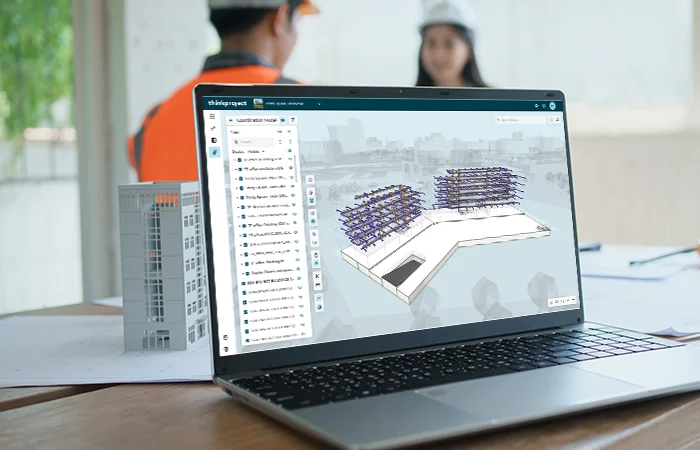
BIM collaboration: How connected project teams work better together
Read moreSee how BIM improves construction collaboration through shared models, clash detection, issue tracking, CDE workflows and connected project information.
-
Blog
Asset Management
From delivery to lasting performance: four governance priorities for Spain’s asset owners
Read moreDiscover four asset governance priorities that help Spain’s asset owners improve information reliability, flexibility, decision speed and ROI.
-
Blog
Built Asset Lifecycle Platform
Construction project life cycle: 6 phases from concept to handover
Read moreUnderstand the construction project life cycle, from feasibility and design to procurement, construction, commissioning and handover.
-
Blog

Field Management
Thinkproject HANDOVER: Turn project information into operations-ready asset data
Read moreDiscover how Thinkproject HANDOVER helps asset owners and contractors reduce information gaps and deliver validated asset data from construction into operations.
-
Event

Built Asset Lifecycle Platform
Thinkproject Live London 2026
Join the waitlistDiscover how AI and connected data are helping teams reduce risk, improve control, and make faster, smarter decisions across the project lifecycle.
-
Event

Built Asset Lifecycle Platform
Thinkproject Live Events 2026
Read moreJoin construction, infrastructure, and asset management leaders for a day focused on the future of project and asset delivery.
-
Blog

Asset Management
Asset lifecycle management in construction: From planning to decommissioning
Read moreLearn how asset lifecycle management connects planning, construction, handover, operations and maintenance to improve built asset performance.
-
Blog

BIM
Browser-based BIM viewer performance: 10 factors that affect large IFC models
Read moreDiscover what impacts browser-based BIM viewer performance - from geometry and IFC file quality to client hardware and network. A technical guide for BIM teams.