
From projects to intelligent assets: 8 takeaways from Thinkproject Live London 2026
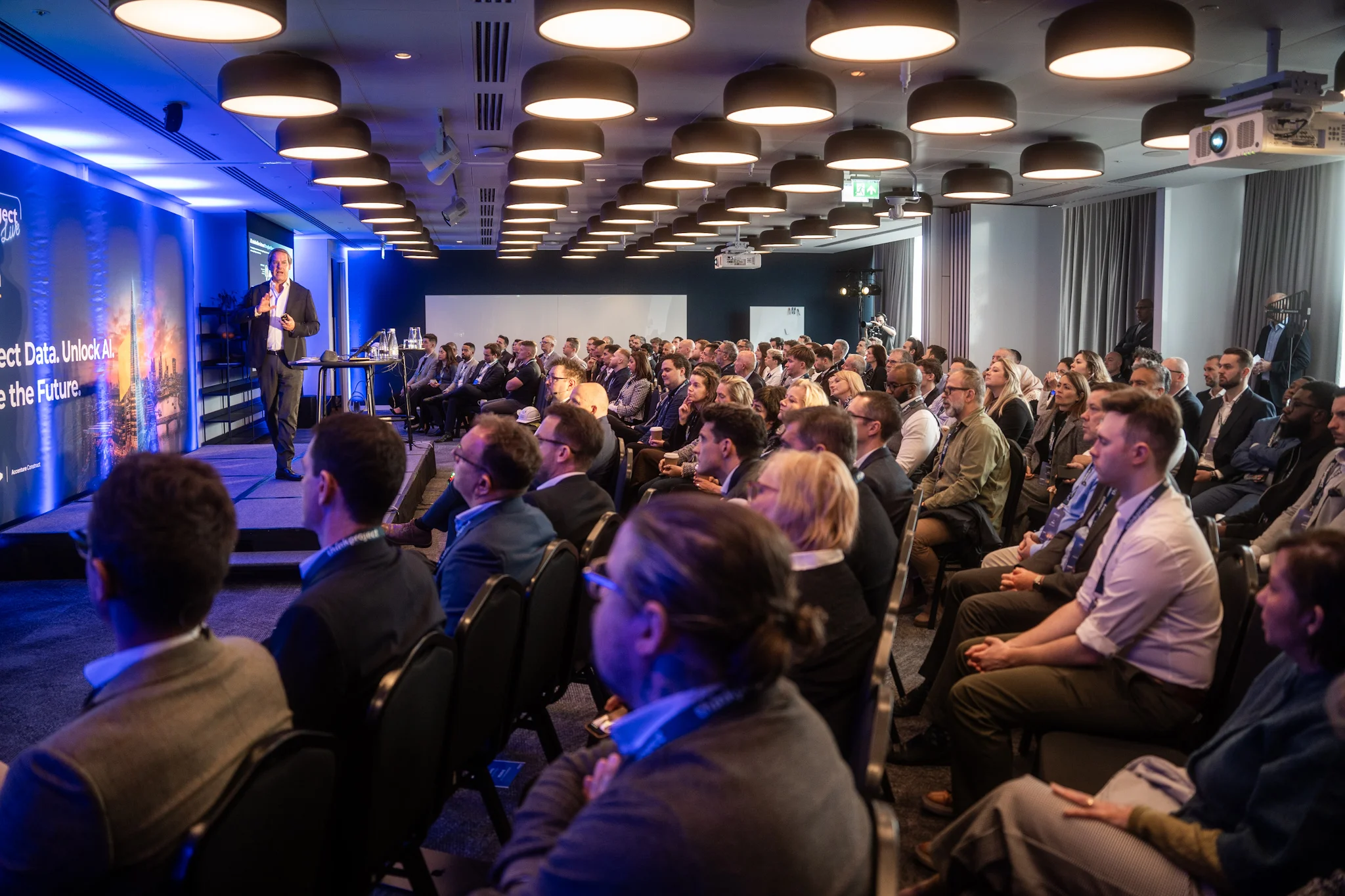
On November 3rd, Thinkproject Live London brought together industry leaders from the construction and infrastructure sector to explore the future of built asset management. From connecting project information to improving commercial decisions and putting AI into practice, the discussions highlighted a common challenge: how can organisations turn growing volumes of data into better outcomes?
With perspectives from Thinkproject, Sizewell C, SP Energy Networks, Accenture, Drees & Sommer and The B1M, the event offered practical insights into the opportunities and challenges the industry is facing.
Here are our top eight key takeaways for construction and asset management leaders.
1. Project completion is only the beginning of asset value
Challenge
Critical project information can become fragmented or lost during handover, leaving asset owners without reliable records to support decades of operation and maintenance.
Practical implication
Incomplete or inaccessible information can make maintenance, investment planning and future asset decisions more difficult and costly.
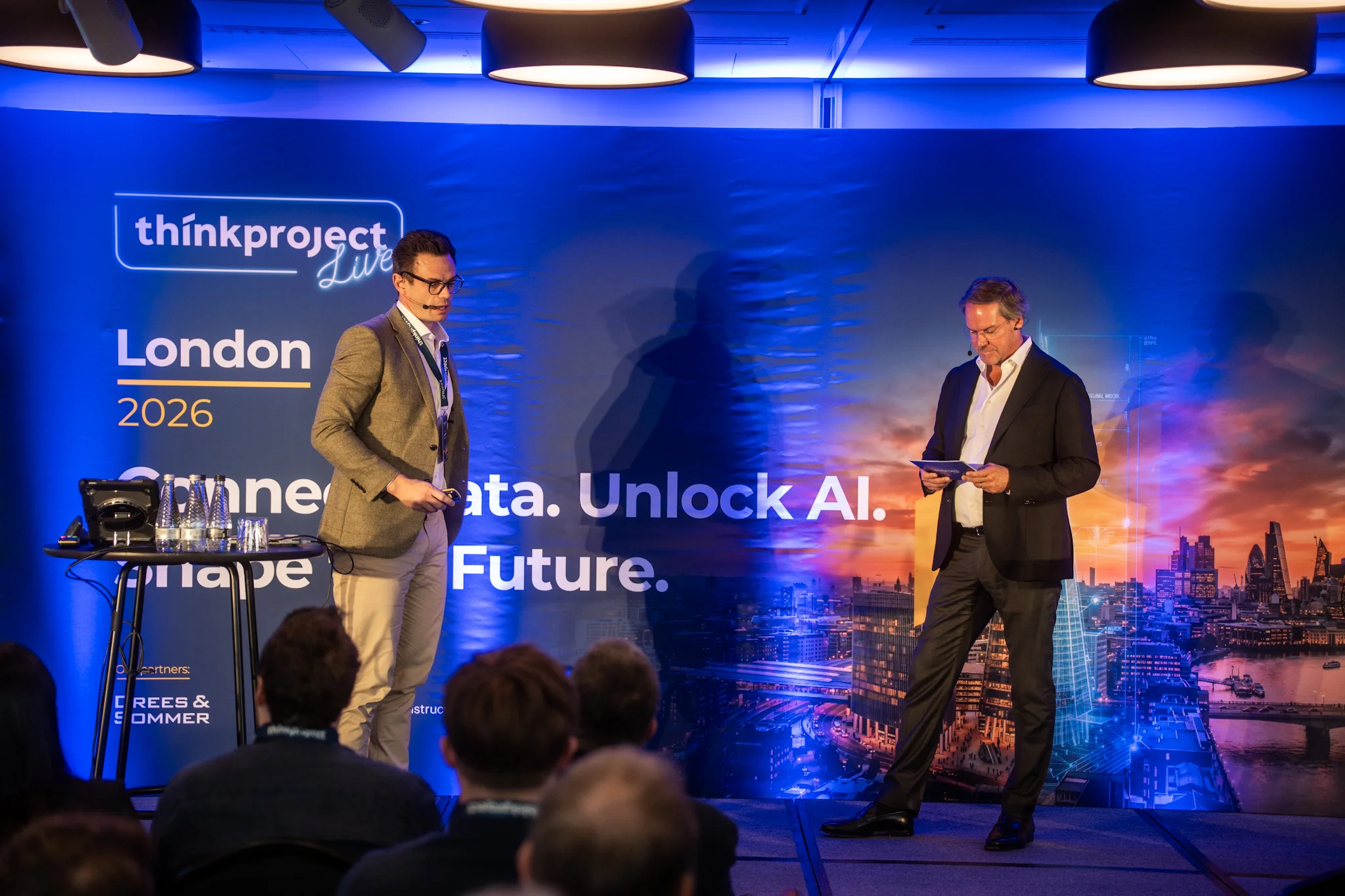
How can infrastructure owners protect critical information and make better decisions over an asset’s entire lifespan? This was a central question in From Projects to Asset Portfolios, featuring Renzo Taal, CEO of Thinkproject, and Fabien Lecardonnel, Senior Commercial Manager – Performance at Sizewell C.
Construction success is traditionally measured by time, budget and project completion. But infrastructure assets can remain operational for decades, requiring continuous maintenance, investment and modernisation.
Renzo described this challenge as the asset data paradox: while the physical asset survives, knowledge about it often deteriorates as information passes between organisations, systems and lifecycle stages.
For Sizewell C, which has an expected operational life of at least 60 years, preserving reliable information starts during construction. Fabien explained how the organisation uses Thinkproject CONTRACTS to manage early warnings, compensation events and contractual communications across NEC and FIDIC contracts. This helps reduce commercial risks, maintain an auditable record of decisions and improve visibility for reporting and decision-making.
Key takeaway: Think beyond project completion. Establish reliable, traceable information from the outset so it can continue supporting decisions throughout the asset lifecycle.
2. Connected information matters more than the number of digital tools
Challenge
Project information is scattered across disconnected systems, making it difficult for teams to access, share and trace information throughout the asset lifecycle.
Practical implication
Information gaps and duplicated effort can slow collaboration, delay decisions and create challenges when transitioning assets from construction to operations.
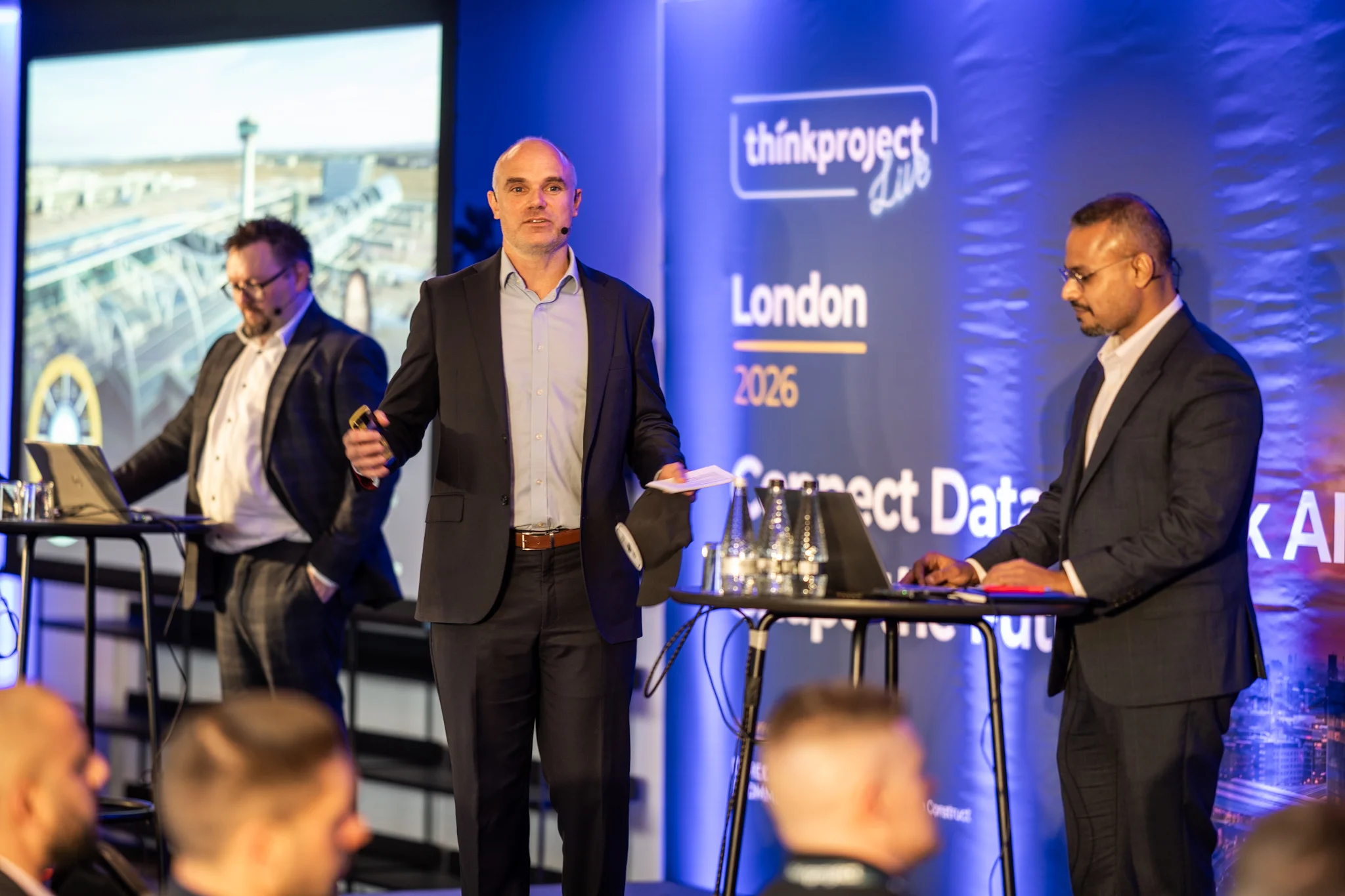
Thinkproject’s Oliver Long, Paul Rose and Anubhav Barua demonstrated how different stakeholders interact with the same asset information in their session One Platform. Many Perspectives, highlighting the importance of connected data and workflows.
Project managers, contract managers, BIM coordinators and maintenance teams all need different information about the same asset. When documents, models, contracts and maintenance records are managed in disconnected systems, information becomes fragmented and difficult to trace.
Using an airport scenario, the session illustrated how connecting these perspectives can help preserve information and its context as an asset moves through design, construction and operations.
- For asset owners, this supports a smoother transition from project delivery to operations.
- For contractors, it enables more consistent collaboration and reduces information gaps between teams.
Key takeaway: Connect people, processes and information across existing systems before introducing additional tools, ensuring teams can access consistent information throughout the asset lifecycle.
3. Scaling infrastructure delivery requires stronger commercial visibility
Challenge
Fragmented contract records, manual reporting and inconsistent audit trails make it difficult to maintain commercial oversight as infrastructure programmes expand.
Practical implication
Limited visibility can delay the identification of contractual risks, increase administrative effort and weaken commercial control across growing project portfolios.
Scaling infrastructure investment requires more than additional resources. It demands consistent processes, reliable commercial data and better visibility across projects.
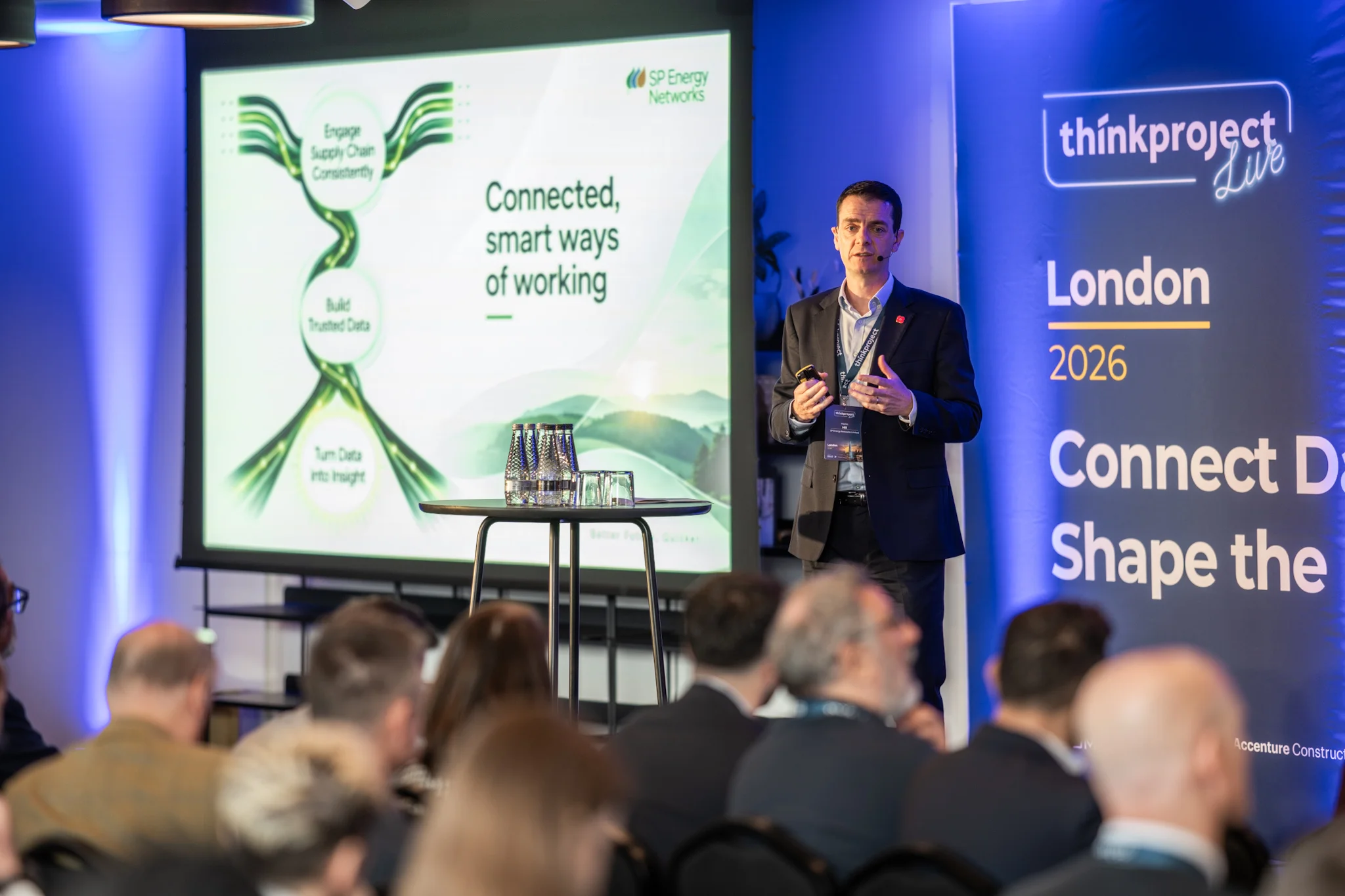
This challenge is particularly relevant for SP Energy Networks, which is preparing to deliver a £12 billion investment programme by 2031. In Strengthening Commercial Insights Across the Asset Lifecycle, Martin Hill, Core Portfolio Director – Transmission, explained how the organisation is transforming its commercial processes and systems to support delivery at greater scale.
Fragmented contract records, manual reporting and inconsistent audit trails can make it difficult to maintain control as portfolios expand. To address these challenges, SP Energy Networks began implementing Thinkproject CONTRACTS in 2026, starting with pilot projects before rolling out to strategic partners.
By November 2026, the organisation had reached 50 NEC4 contracts, with a target of approximately 180 contracts on Thinkproject by the end of 2027. The phased implementation is designed to strengthen contract governance, improve traceability and support more reliable commercial reporting.
Martin also highlighted the importance of keeping critical information accessible beyond construction, ensuring that records created during delivery remain useful throughout the asset lifecycle.
Key takeaway: Standardise contract administration, strengthen governance and establish reliable commercial reporting to maintain visibility and control as infrastructure delivery scales.
4. Faster processes do not always mean better outcomes
Challenge
Accelerating contract administration through AI or automation does not address incomplete information, delayed reporting or poor decision-making.
Practical implication
Faster processes can still produce incorrect decisions or allow contractual risks to escalate if critical site information reaches decision-makers too late.

In his session, Velocity, Not Speed: AI and Construction Contracts, Ben Walker, CEO of Contracts Geek, Director at Gather and NEC drafter and tutor, challenged the assumption that faster contract administration automatically leads to better outcomes.
AI promises faster notifications, assessments and reporting. But completing a process more quickly offers limited value if the underlying information is incomplete or the decision is incorrect.
Ben distinguished between speed and velocity: while speed describes how quickly something moves, velocity also considers its direction.
He highlighted two persistent challenges in construction contract management:
- Information fidelity: Important details can be lost as site records are summarised and passed to management teams.
- Information lag: Delays between an event occurring and decision-makers becoming aware of it reduce opportunities for early intervention.
AI could help address these challenges by connecting site observations with contractual information, enabling teams to identify risks and act sooner.
Key takeaway: Prioritise information accuracy and timely risk identification before automating contract administration, ensuring faster processes lead to better decisions.
5. Decision delays are a hidden threat to project performance
Challenge
Critical project decisions can remain unresolved because accountability is unclear and decision delays are not consistently monitored.
Practical implication
Growing decision backlogs can disrupt project activities, delay milestones and increase pressure on delivery schedules and budgets.

Julian Henley, Director – Infrastructure, UK & Ireland at Drees & Sommer, explored the often-overlooked impact of delayed decisions in his session Trees in Summer: Making the Decisions That Keep Major Projects Moving.
Construction teams closely monitor schedules, budgets and risks. Yet critical decisions can remain unresolved for weeks, delaying work and putting milestones under pressure.
Julian argued that decision-making should be treated as a measurable aspect of project performance, introducing three indicators:
- Decision ownership: Who is accountable for making the decision?
- Decision latency: How long does it take to reach an authorised decision?
- Decision backlog: Which unresolved decisions are accumulating and affecting progress?
These indicators can reveal bottlenecks that traditional project reporting may overlook.
A practical starting point is to select one critical milestone or work package and monitor the decisions affecting its progress.
Key takeaway: Track decision ownership, latency and backlog alongside traditional project KPIs, starting with the decisions affecting one critical milestone or work package.
6. The next step for construction AI is moving from insights to action
Challenge
Many organisations are experimenting with AI but struggle to move beyond isolated pilots because information, applications and workflows are not sufficiently connected.
Practical implication
Without reliable data, integration and governance, AI may remain limited to information retrieval rather than supporting controlled actions and more complex workflows.

Olivier Colinet, Chief Product & Technology Officer at Thinkproject, outlined how AI is evolving from information retrieval towards intelligent automation in his session The Future of Asset Intelligence: Reimagined with AI.
AI adoption in construction is accelerating, but scaling remains a challenge. Olivier referenced RICS research showing that while 39% of surveyed organisations were running AI pilots, only 4% reported using AI at scale.
He introduced three levels of AI capability that illustrate how organisations can progress from experimentation to operational value.
Level 1: Search and understand
AI retrieves information, interprets documents and analyses structured data, helping teams find answers and understand performance.
Level 2: Act
AI supports controlled actions within applications, using connected APIs, established permissions and human approval.
Level 3: Orchestrate
AI coordinates complex business processes across systems, managing workflows and referring exceptions to human experts.
This progression shows how AI could evolve from an information assistant into an active participant in construction and asset management workflows.
Achieving this requires connected applications, reliable data and clear governance.
Key takeaway: Identify a high-value, information-intensive workflow and assess the data, integration and governance needed to introduce controlled AI assistance before scaling automation.
7. Successful AI adoption starts with people and trusted information
Challenge
Organisations risk introducing AI before addressing unreliable data, inconsistent operational processes and gaps in workforce readiness.
Practical implication
AI adoption may fail to deliver meaningful value if teams cannot trust the information, understand the processes or confidently use the technology.

In her session AI in Construction, Huda As’ad, Managing Director – Infrastructure & Capital Projects UKI at Accenture, explained why successful AI adoption depends on strong foundations, including skilled people, trusted information and well-defined processes.
Construction has experienced several waves of digital innovation, from BIM to digital twins and now AI. Yet technology alone has not resolved the industry’s underlying challenges.
Huda outlined five layers required for successful AI adoption: people, trusted data, strong operational processes, appropriate technology and finally AI.
Her recommendation was to start small and focus on practical value:
- Understand which information and processes frontline teams do not trust.
- Identify one high-value decision and make its supporting data reliable.
- Test AI on a live project, demonstrate value and then scale.
This approach helps organisations move beyond experimentation without overlooking the people and processes essential to successful implementation.
Key takeaway: Start with one high-value operational decision, improve the reliability of its supporting information and processes, then test AI on a live project before scaling.
8. The future of construction is about empowering people with technology
Challenge
Construction faces increasing productivity demands and workforce pressures, while technology adoption alone cannot resolve challenges around skills, collaboration and wellbeing.
Practical implication
Focusing on automation without investing in people risks overlooking the human expertise, relationships and workforce resilience needed for successful project delivery.
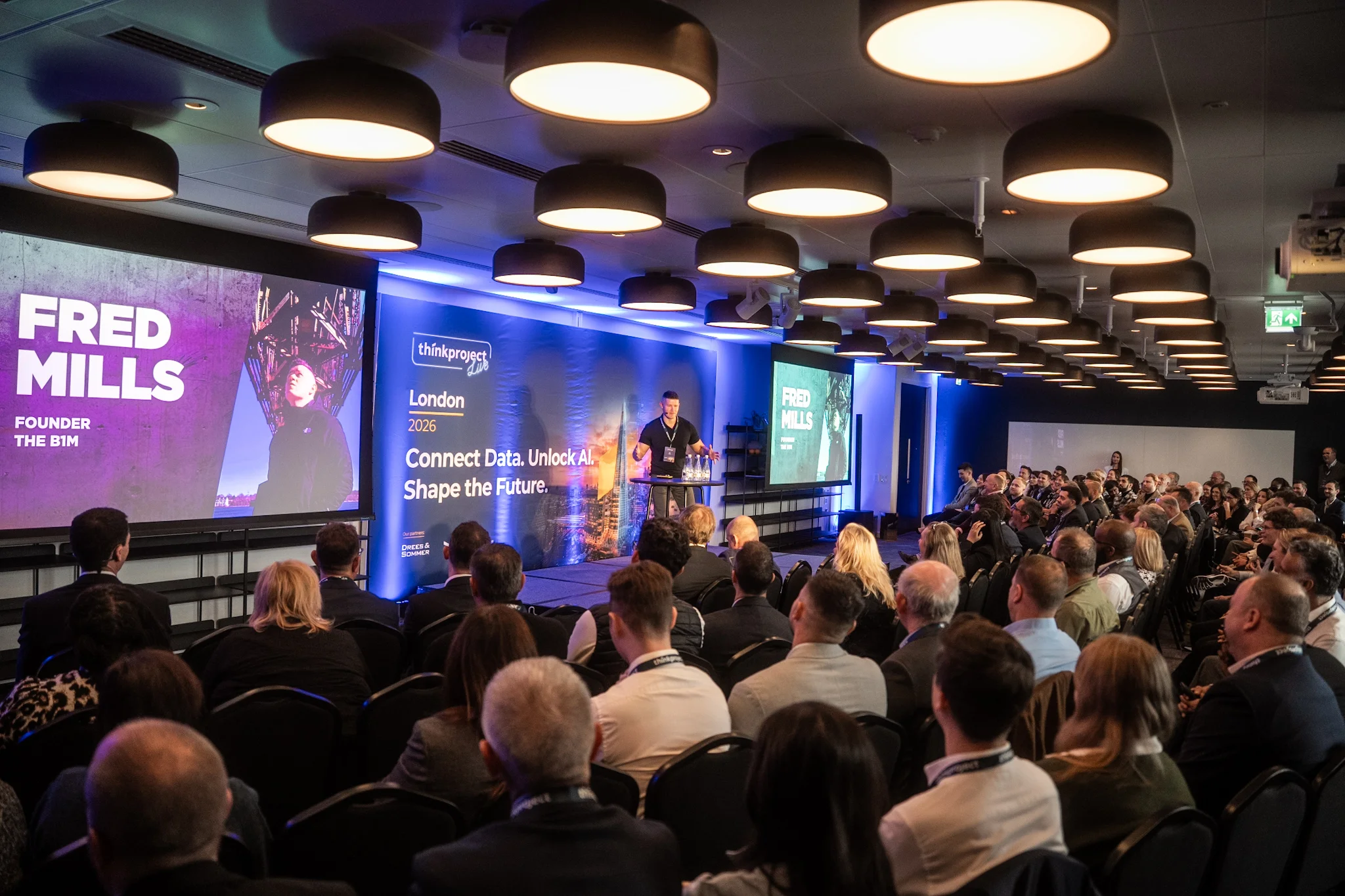
Fred Mills, Founder of The B1M, shared his perspective on how AI is transforming construction in his session The Future of AI: What Leaders Need to Know. Drawing on examples from major projects around the world, he explored how technology can make construction more intelligent, automate repetitive work and empower people.
Construction faces growing pressure to deliver more, faster and more sustainably, while addressing significant workforce challenges.
Fred highlighted three opportunities for AI:
- Making construction more intelligent: Helping teams interpret large volumes of project information and make better-informed decisions, including through digital twins and AI-assisted monitoring.
- Automating repetitive work: Reducing administrative and labour-intensive tasks so professionals can focus on higher-value activities.
- Empowering construction teams: Supporting people in their everyday work, including new approaches to understanding team performance and wellbeing.
However, AI alone cannot solve the industry’s challenges. Fred emphasised the importance of building a sustainable workforce around four foundations: a compelling industry vision, diversity, stronger human connections and safety, including mental health.
Technology should support these foundations, helping organisations improve productivity, resilience and quality while contributing to a more sustainable built environment.
Key takeaway: Use AI to reduce repetitive work and support better decisions, while investing in skills, collaboration, diversity and wellbeing to strengthen the construction workforce.
From insights to action: What comes next?
Across the discussions at Thinkproject Live London 2026, a common message emerged: the future of construction depends on connecting information, improving decisions and using technology to create lasting value.
For asset owners, this means preserving knowledge throughout the asset lifecycle and improving visibility across portfolios. For contractors and project teams, it means stronger collaboration, better commercial control and more effective decision-making.
And for organisations exploring AI, it means establishing the right foundations before attempting to scale intelligent automation.
Three questions provide a useful starting point:
- Is our project information ready for the full asset lifecycle? Consider whether records created during delivery will remain accessible and useful throughout operations and maintenance.
- Can we identify the decisions slowing down our projects? Review accountability, approval times and unresolved decisions across critical workflows.
- Are we ready to move AI from experimentation into everyday operations? Assess data quality, processes and workforce readiness before expanding adoption.
The opportunity is not simply to deliver projects faster. It is to make better decisions, preserve valuable knowledge and build more intelligent assets that deliver value for decades.
Facing challenges with document control, site monitoring or handover?
Speak to our experts.
Thank you to all our speakers, partners and attendees who contributed to Thinkproject Live London 2026 and helped advance these important conversations!

More resources
Innovation Series
Built Asset Lifecycle Platform
Thinkproject Live and Recorded Webinars
Read moreLive and recorded webinars for teams that design, build, operate, and maintain the assets that shape our physical world.
-
Blog
BIM
BIM collaboration: How connected project teams work better together
Read moreSee how BIM improves construction collaboration through shared models, clash detection, issue tracking, CDE workflows and connected project information.
-
Blog
Asset Management
From delivery to lasting performance: four governance priorities for Spain’s asset owners
Read moreDiscover four asset governance priorities that help Spain’s asset owners improve information reliability, flexibility, decision speed and ROI.
-
Blog
Built Asset Lifecycle Platform
Construction project life cycle: 6 phases from concept to handover
Read moreUnderstand the construction project life cycle, from feasibility and design to procurement, construction, commissioning and handover.
-
Blog

Field Management
Thinkproject HANDOVER: Turn project information into operations-ready asset data
Read moreDiscover how Thinkproject HANDOVER helps asset owners and contractors reduce information gaps and deliver validated asset data from construction into operations.
-
Event

Built Asset Lifecycle Platform
Thinkproject Live London 2026
Register your interest for 2027Discover how AI and connected data are helping teams reduce risk, improve control, and make faster, smarter decisions across the project lifecycle.
-
Event

Built Asset Lifecycle Platform
Thinkproject Live Events 2026
Read moreJoin construction, infrastructure, and asset management leaders for a day focused on the future of project and asset delivery.
-
Blog

Asset Management
Asset lifecycle management in construction: From planning to decommissioning
Read moreLearn how asset lifecycle management connects planning, construction, handover, operations and maintenance to improve built asset performance.
-
Blog

BIM
Browser-based BIM viewer performance: 10 factors that affect large IFC models
Read moreDiscover what impacts browser-based BIM viewer performance - from geometry and IFC file quality to client hardware and network. A technical guide for BIM teams.