
7 Best Common Data Environment Software Types for Construction
Construction projects generate vast amounts of data across design, delivery, handover and operations. And all of these drawings, models, specifications, approvals, contracts and site records need to be managed in a way that keeps teams aligned and decisions traceable.
As projects become more complex, organisations need more than a place to store files. They need governed information that can be trusted, reused and carried forward across the built asset lifecycle. Organisations are increasingly searching for the best common data environment software out there. Yet many buyers quickly discover that there is no single category of CDE software. Different solutions support different information management needs, from document control and BIM collaboration to asset information management and lifecycle operations.
This guide explores the best CDE software types available today and explains what capabilities construction organisations should prioritise when evaluating solutions.
What is common data environment software?
Common data environment (CDE) software represents a digital solution that provides a single, governed source of truth for project information. It enables teams to capture, manage, review, share and approve information in a controlled environment so everyone works from the latest, authorised data.
Modern CDE platforms support document management, workflows, collaboration, audit trails and information governance throughout the asset lifecycle. They also play a critical role in supporting ISO 19650 information management processes and enhancing BIM workflows.

Common data environment software vs. general data environment software
Although the terms are sometimes used interchangeably, a common data environment is designed specifically for governed project and asset information management.
| Software type | Main purpose | Relevant to CDE types? |
|---|---|---|
Shared drives and file storage platforms | Store and share files | Limited |
Enterprise content management systems | Manage corporate documents | Partially |
Data warehouses and analytics platforms | Aggregate and analyse data | No |
Business intelligence tools | Reporting and dashboards | No |
Common data environment software | Govern project and asset information throughout the lifecycle | Yes |
BIM collaboration platforms | Coordinate models and project information | Yes |
Asset information management platforms | Manage lifecycle asset information | Yes |
The key difference between these various software types is governance. The best CDE platforms provide structured workflows, version control, permissions, approvals and auditability rather than simple file storage.
7 best common data environment software types for construction
Construction and infrastructure projects have different requirements depending on project complexity, delivery model and lifecycle objectives. The following software categories represent the most common approaches used today.
In many cases, the strongest approach is not one standalone tool, but a connected platform strategy that brings several CDE-related capabilities together.
1. Document management systems
Document management systems (like Microsoft Sharepoint) are often the starting point for organisations looking to improve information control. These solutions focus on storing, organising and distributing project documents while maintaining version control and access permissions.
A construction-focused document management system typically includes:
- Centralised document storage
- Version control
- Metadata management
- Review and approval workflows
- Controlled document distribution
- Audit trails
These capabilities help reduce information duplication and minimise the risk of teams working from outdated documents.
However, standalone document management solutions may struggle to support broader lifecycle workflows without integration into a larger information management ecosystem. They may also lack the construction-specific workflows, audit trails, controlled approvals and handover structures required on complex projects.
2. BIM-centric collaboration environments
As Building Information Modelling (BIM) adoption has grown, many organisations have implemented BIM-focused collaboration environments that extend traditional document management with model-based coordination.
These environments help project teams work with federated models, coordinate design information and manage model-related issues throughout project delivery.
Typical capabilities include:
- Federated model viewing
- BIM issue management
- Clash coordination
- Model-based reviews
- Open BIM workflows
- Collaboration around model data
This software category is particularly valuable for organisations seeking to improve project coordination and reduce design conflicts before construction begins. Strong BIM-centric environments also support ISO 19650-aligned information management and help organisations establish more efficient BIM workflows.
However, BIM collaboration alone does not always provide the full governance layer needed for documents, approvals, communications, handover and asset information continuity.
3. Integrated construction management environments
As projects become more complex, many organisations move beyond isolated information systems and adopt integrated construction management environments.
These platforms combine information management with broader project controls and delivery processes, helping teams connect project information with execution activities.
Common capabilities include:
- Project information management
- Workflow automation
- Project controls integration
- Reporting and dashboards
- Stakeholder collaboration
- Risk visibility
Integrated environments help improve transparency and reduce the operational silos that often exist between project teams. They are especially valuable when project information needs to be connected to workflows, responsibilities, reporting and decision-making rather than managed as static documents.
4. Field-focused collaboration systems
Information management does not stop at the office. Site teams generate critical project data every day through inspections, quality checks, safety observations and field workflows.
Field-focused collaboration systems bring governance directly to project execution by connecting site activities with project information.
Typical functionality includes:
- Mobile inspections
- Quality management workflows
- Safety observations
- Site reporting
- Offline data capture
- Workflow-based approvals
These solutions help ensure that field information becomes part of the project’s controlled information record rather than remaining trapped in spreadsheets, emails or paper forms.
5. Project information management systems
Project information management systems provide a broader approach to information governance across multiple stakeholders and delivery stages.
These solutions focus on creating a structured information backbone that supports collaboration, compliance and accountability throughout project delivery.
Key capabilities often include:
- Information governance
- Workflow management
- Communication management
- Information traceability
- Controlled approvals
- Compliance reporting
This category aligns closely with the principles of a modern CDE and often forms the foundation for enterprise-wide information management strategies.
The most advanced systems support ISO 19650 principles through standardised naming conventions, metadata structures, approval workflows and lifecycle-ready information management. They are particularly important for organisations that need repeatable governance across multiple projects, programmes and stakeholders.
6. Handover and asset information systems
Many projects perform well during delivery but struggle during handover because asset information is incomplete, inconsistent or difficult to validate.
Handover and asset information systems address this challenge by managing operational information requirements throughout project delivery rather than waiting until project closeout.
These systems commonly provide:
- Asset information requirements management
- Structured data collection
- Validation workflows
- Readiness tracking
- Documentation linking
- Operational data transfer
This approach supports a continuous handover process and helps ensure that asset information remains accurate, complete and usable when operations begin.
For owners and operators, these capabilities can significantly reduce operational risk while improving readiness from day one.
The key is to start handover early, not at project closeout. Handover information should be defined, collected and validated throughout delivery.
7. Lifecycle asset information platforms
The most advanced category of common data environment software extends beyond project delivery and supports the full built asset lifecycle.
Rather than focusing solely on projects, lifecycle asset information platforms connect information across planning, design, construction, handover, operations and maintenance.
Capabilities often include:
- Asset information management
- Asset data governance
- Lifecycle information continuity
- Asset hierarchies and relationships
- Cross-system integration
- Portfolio visibility
These platforms provide a persistent information foundation that remains valuable long after construction is complete, turning project information into a long-term asset data foundation, helping owners and operators make better decisions beyond construction.
This lifecycle approach reflects the growing recognition that project information should not be recreated at every phase. Instead, information should evolve in a governed way throughout the life of the asset.
This is the direction increasingly adopted by organisations seeking long-term value from digital transformation initiatives.
What features should the best common data environment software include?
Regardless of the software category used, the best common data environment software should include a core set of capabilities that support information governance, collaboration and lifecycle continuity.
CDE software evaluation checklist
✔ Single source of truth for project information
✔ Version control and document history
✔ Role-based permissions and access control
✔ Workflow automation and approvals
✔ Complete audit trails
✔ ISO 19650 alignment
✔ BIM integration and model collaboration
✔ Mobile access for field teams
✔ Reporting and analytics
✔ Information traceability
✔ Structured handover support
✔ Asset information management capabilities
✔ Integration with other business systems
✔ Scalability across projects and portfolios
✔ Support for the full built asset lifecycle
Organisations searching for the best ISO 19650 software should place particular emphasis on governance, metadata management, approval workflows and traceability.
Which CDE software type is best for your project?
The right solution depends on your project’s goals, stakeholders and lifecycle requirements.
| Project need | Best-fit CDE software type |
|---|---|
Basic document control | Document management systems |
BIM coordination and model reviews | BIM-centric collaboration environments |
Integrated project delivery | Integrated construction management environments |
Site inspections and field workflows | Field-focused collaboration systems |
Information governance and compliance | Project information management systems |
Digital handover and operational readiness | Handover and asset information systems |
Full lifecycle asset information management | Lifecycle asset information platforms |
Many organisations ultimately combine several of these categories within a connected platform strategy rather than relying on a single standalone tool.
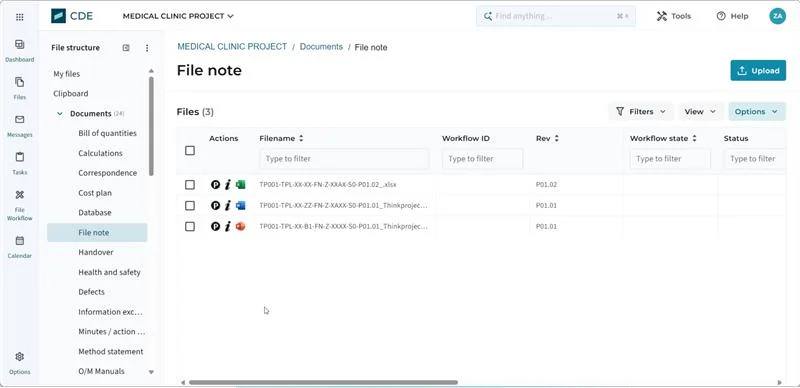
Build a connected CDE for the full built asset lifecycle
The conversation around the best CDE software is evolving. Buyers are no longer looking only for better document management. They are looking for connected information that remains valuable throughout the entire lifecycle of a built asset.
The strongest solutions combine governance, collaboration, traceability and lifecycle continuity within a connected platform approach. This helps teams reduce information silos, improve decision-making and maintain confidence in their data from design through operations.
Thinkproject’s Built Asset Lifecycle Platform connects project delivery, handover and operations through a shared information foundation, enabling organisations to manage information, workflows and asset data across every lifecycle stage.
NextGen CDE is Thinkproject’s common data environment solution, a product that is integrated within the Thinkproject platform to help teams govern project information, connect workflows and support lifecycle data continuity.
Frequently asked questions
Document management software helps teams store, organise and share documents. CDE software goes further by adding construction-specific governance, workflows, approvals, audit trails, metadata, permissions and traceability. A true CDE helps ensure project teams work from controlled, authorised information throughout delivery and handover.
A shared drive can store project files, but it does not provide the governance capabilities expected from a true common data environment. Most shared drives lack structured workflows, controlled approvals, audit trails, information traceability and ISO 19650-aligned processes.
For smaller projects, shared drives may provide basic collaboration. However, larger or more complex projects typically require dedicated CDE software to ensure information remains controlled and auditable.
In practice, a shared drive may support file access, but it does not provide the governed information management needed for complex construction delivery.
ISO 19650 provides an internationally recognised framework for managing information throughout the lifecycle of built assets. It helps organisations establish consistent information management processes, improve collaboration and reduce project risk.
The best ISO 19650 software supports controlled workflows, metadata standards, document versioning, audit trails and clearly defined information responsibilities. These capabilities help organisations maintain information quality and compliance throughout project delivery.
Responsibility varies depending on the project structure and contractual arrangements. In many projects, the information manager, BIM manager, project information manager or lead contractor may oversee the CDE.
Regardless of who manages it, successful CDE implementation requires clearly defined governance, ownership, workflows and responsibilities. The goal is to ensure all project participants contribute to and access information in a consistent and controlled way.
More insights
-
Blog
CDE
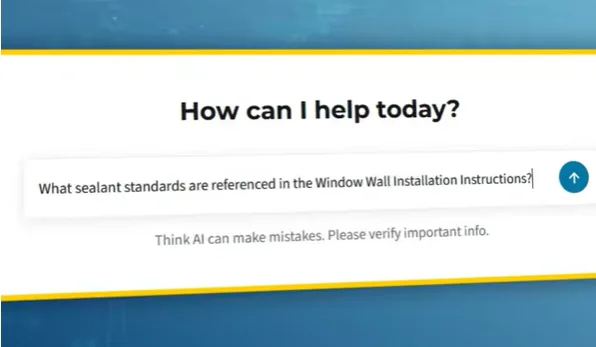
AI Search in NextGen CDE: How Thinkproject AI turns governed construction data into confirmed answers
Read moreDiscover how AI search in a NextGen CDE helps construction teams find current, approved project information while preserving permissions and control.
-
Blog

Digitalization
Construction business intelligence: Turning data into better decisions
Read moreLearn how construction business intelligence connects project data, improves reporting and supports better decisions across the asset lifecycle.
-
Blog

Contracts
Best construction contract management software: 11 features to look for
Read moreCompare the key features to look for in construction contract management software, from NEC, JCT and FIDIC workflows to audit trails and risk control.
-
Event

Built Asset Lifecycle Platform
Thinkproject Live London 2026
Register nowDiscover how AI and connected data are helping teams reduce risk, improve control, and make faster, smarter decisions across the project lifecycle.
-
Event

Built Asset Lifecycle Platform
Thinkproject Live Events 2026
Read moreJoin construction, infrastructure, and asset management leaders for a day focused on the future of project and asset delivery.
-
Blog
Contracts
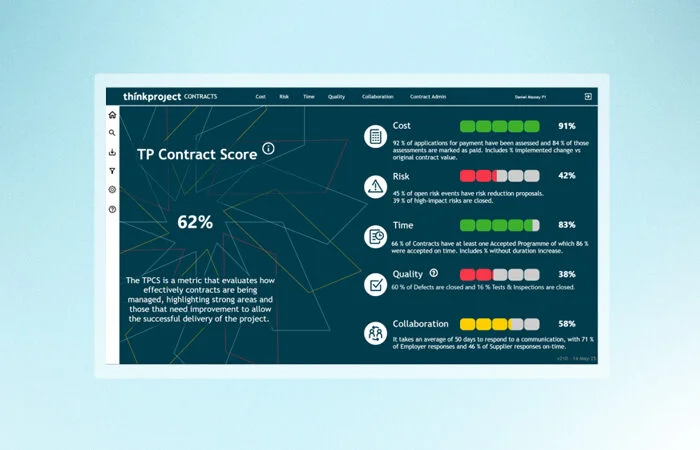
JCT contract types: Choosing and managing the right contract
Read moreCompare the main JCT contract types, understand construction management contracts and learn how to choose and administer the right form.
-
Blog

Built Asset Lifecycle Platform
AI in construction: Uses, benefits and real-world examples
Read moreExplore how AI in construction improves planning, safety, project controls, handover and asset performance across the built asset lifecycle.
-
Blog
Health & Safety
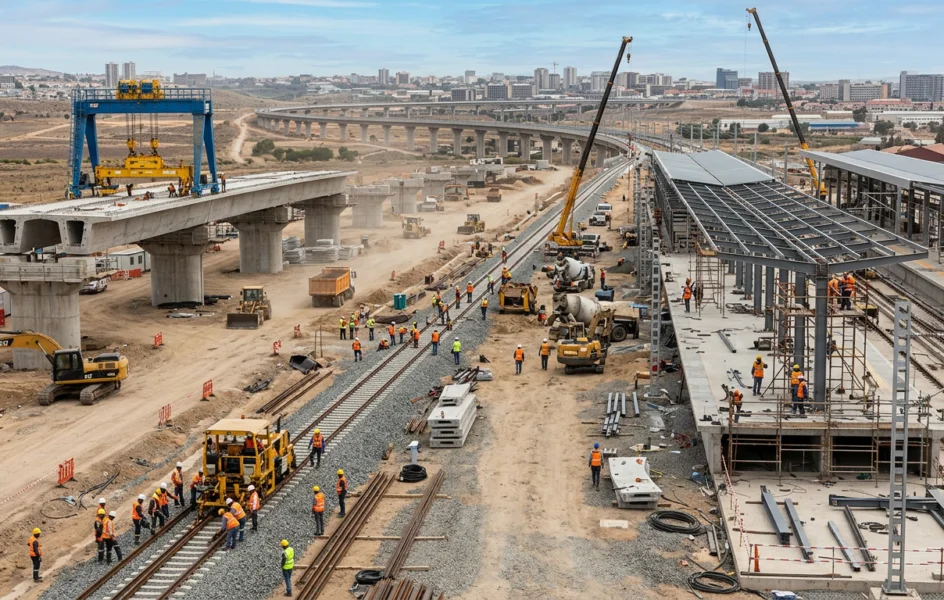
Construction risk management: How to identify, assess and control project risks
Read moreLearn how to identify, assess and control construction risks across cost, safety, contracts, programmes and project information.
-
Blog
Digitalization
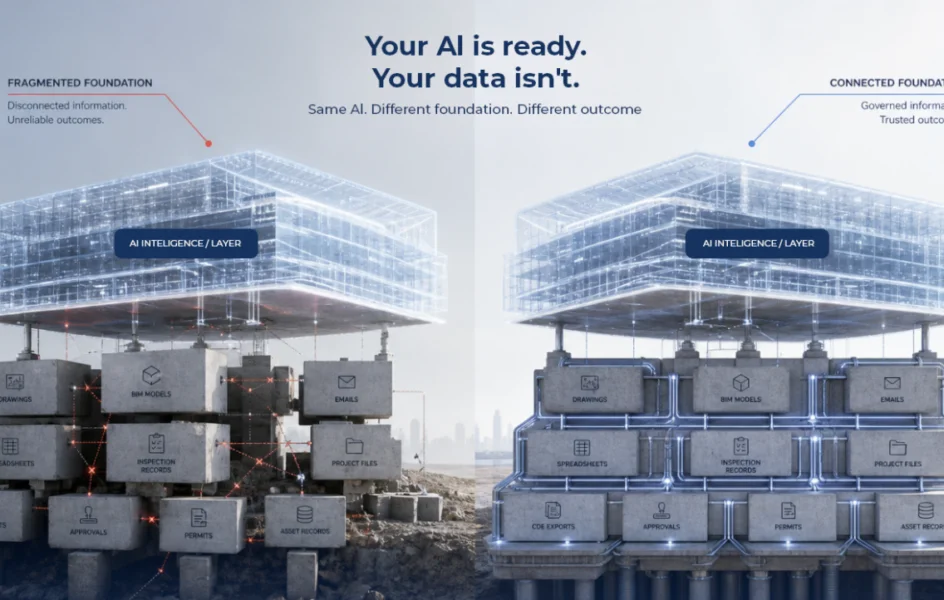
Your AI is ready. Your data isn’t.
Read moreAI is exposing a deeper problem in construction: fragmented project data. See why connected, governed information is the foundation for reliable AI.